Showing posts with label GAP Adventures. Show all posts

Saturday, 26 July 2014

African Idol: Cruise West Africa

#expeditioncruising


The mysterious, once forbidden lands of West Africa are slowly opening to adventurous travellers. Roderick Eime traces slaves, pirates and ghosts from Cape Town to Dakar. With G Adventures.


Thursday, 15 August 2013

Bad Lands Come Good in West Africa

Words and images by Roderick Eime
(Full version of story submitted to News Limited)


A ready exchange of smiles from a people eager for peace is how Roderick Eime will remember his time in the once strife-torn West Africa.

“What was that?” gasped Beatrix, grabbing my forearm tightly. We all heard it. Was it the sound of waves from the Atlantic Ocean crashing on the rocks outside or, as many of us thought, the ghostly whispers of long departed slaves who once huddled in these squalid, pitch black dungeons awaiting an uncertain fate.

Here in the underground holding cells at the now UNESCO World Heritage listed Cape Coast Castle in Ghana, we stand transfixed, listening to a kind of supernatural white noise that waxes and wanes in our subconscious. Our heartbeats quicken and our skin tingles at the realisation that over the centuries, thousands of miserable souls shuffled through these rank corridors through the infamous ‘door of no return’ on an endless journey of unspeakable horror.

Africa has long been seen as a land of mystery and suspicion by Westerners. An unknown territory full of mind-boggling rites and rituals, but at the same time holding a perverse attraction for all who visit. Even a short stopover on the so-called ‘dark continent’ is sure to leave anyone changed forever.

Native Africans, both black and white, from the relatively familiar-feeling cities of the south, find these wild shores of West Africa a whole new world. There’s black magic (juju) and witchcraft, customs and practices totally at odds with the relaxed European lifestyle, yet here we are totally spellbound.

Sure, adventurous travel operators have offered overland trips for hardy, intrepid souls for some years, but regular commercial passenger cruises are a relatively new experience. Today the world’s growing fleet of cruise ships, large and small, are gradually unlocking these mysterious ports-of-call, picking their way from Namibia to Congo and on to Sierra Leone and Senegal. The biggest, like QM2, might make just two or three stops, while the small and intensely inquisitive vessels like ours, more than a dozen. Next year, G Adventures will increase its calls to 19 and terminate in Marrakech, Morocco.

Aboard G Adventures’ sturdy MS Expedition are 100 curious passengers from the USA, Canada, Australia, the UK, Europe and even Asia, all with a common fascination for the last unknown destinations left on our planet. We are one of just a handful of vessels now intimately exploring the once forbidden, war-ravaged countries slotted, Tetris-style, along the Atlantic coast between Congo and Mauritania. Over the course of three weeks, we will make landfall in a dozen countries, explore bewildering markets and towns, while singing, dancing and eating with people many of us have only seen on the pages of National Geographic or Discovery Channel. It’s a proper adventure and a true expedition.

What’s more, a hand-picked platoon of impressively credentialed lecturers, adventure guides and avid naturalists escorts us at every turn, helping us unravel the flora, fauna and ethnic complexity we encounter every day. I’m one among the small band who continually hovers around David Conrad, a kind of post-Woodstock Indiana Jones with a Ph.D in African history and an eagle-eyed art hunter who’s forgotten more than most us will ever know about this crazy land. Others flock around Dr Steve Boyes, the ornithologist, while Wolfgang Kaehler plays Pied Piper to his wide-aperture gang of camera-toting travellers. Peter Baxter, historian, author and inveterate African field guide, draws a loyal following too, reminding us that Africa is not just for the curious, rubber-necked voyeur. It is a land facing a multitude of environmental and humanitarian challenges from messy and destructive resource exploitation, to grass roots medical facilities.

While it might seem that a motley troupe of floppy-hatted tourists in long socks and sandals buying trinkets would do little to alleviate the plight of the common people, think again. On this G Adventures expedition, there are numerous examples of how our visits directly benefit local communities and how the development of responsible and sustainable tourism practices can go a long way to alleviate the sense of loss and isolation traditional social systems may feel in a rapidly globalising world.

“Apart from the obvious revenue benefits, well managed tourism maintains the viability of local culture, providing an incentive for both its remaining alive and vibrant, but also a framework for it to continue evolving, bearing in mind that culture is fundamentally organic,” Baxter tells me, “A lack of formats such as ours for local cultural display will obviously result in many stagnating and ultimately disappearing under the weight of modern influences.”

Today’s Nigeria is a case in point. Unmonitored oil exploitation and serious environmental degradation in the River Niger’s delta has displaced and disenfranchised many local communities, causing some to resort to radical means of survival, including piracy. While the seaborn bandits are currently targeting oil and fishing vessels, these tactics could change at any time and MS Expedition is prepared. Aboard for that part of the journey are three burly ex-Royal Marines who, by the very look of them, would send any boatload of would-be buccaneers scurrying.

Our passage through the Gulf of Guinea is thankfully uneventful - except for the odd cranky port official and flat tyre – and what surprises many of us is the ready smiles and reflex waves we receive as our tour buses bounce along potholed highways and backroads. It seems the general populous is happy to see us (and our cameras) and the overwhelming feeling is one of welcome – mostly.

While the great continent of Africa may be prone to outbreaks of civil strife, less than benevolent dictatorships and greedy multinationals, it’s the ordinary people who form the fundamental character of each destination we visit. When it came time to go our separate ways in the bustling former French colony of Senegal, it was with a suitcase full of scary carvings and a clinging sense of optimism. An optimism that, if the unifying force of well-managed tourism was allowed to pervade these once sullen lands, Africa would be a better place. Right now, it’s at a crossroad and the once desperate march of manacled slaves is being replaced with lines of khaki-clad travellers hoping to make a difference.


Sunday, 4 August 2013

Unlock the mysteries of the West African coast on a cruise


"WHAT was that?" gasped Beatrix, grabbing my forearm tightly. We all heard it. Was it the sound of waves from the Atlantic Ocean crashing on the rocks outside or, as many of us thought, the ghostly whispers of long-departed slaves who once huddled in these squalid, pitch-black dungeons awaiting an uncertain fate?
Read more

See the image slideshow


Tuesday, 23 July 2013

G Adventures West Africa Cruise extended for 2014

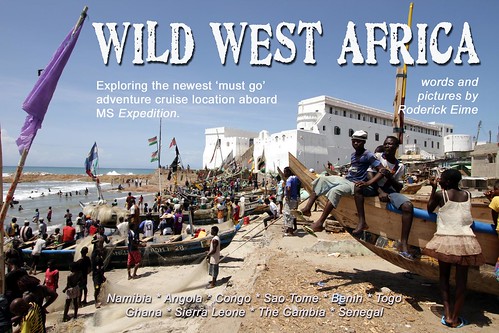
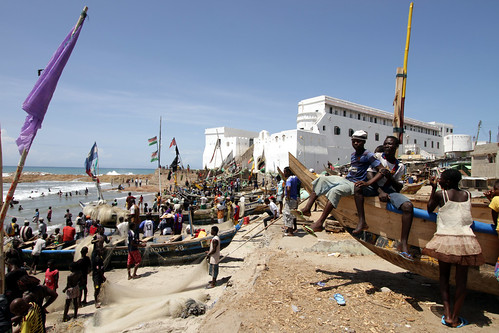
UNESCO-listed Cape Coast Castle and fishing fleet, Ghana (R Eime)
G Adventures extended the itinerary for its West Africa cruise for 2014 as a result of its popularity. The trip travels up the west coast of Africa on the MS Expedition. It cruises for 32 days, calling in 16 ports in 14 countries, including the new ports of Dakhla in Western Sahara, Fuerteventura in the Canary Islands and Agadir (for Marrakech) in Morocco. The trip operated for the first time in April.

The 2014 version of the West Africa Cruise will visit South Africa, Namibia, Angola, the Congo, Sao Tome and Principe, Benin, Togo, Ghana, Sierra Leone, Guinea-Bissau, The Gambia, Senegal, Western Sahara, the Canary Islands and Morocco. It includes opportunities to meet people in remote communities in Benin, Togo, Angola and Sierra Leone, as well as coffin-makers of Ghana and to visit Elmira Castle and Cape Coast Castle, where slaves waited to be shipped to the New World.


Thursday, 18 July 2013

Ocean Magazine - Ocean Cruising - Issue 50


Feature: G Adventures. News: Celebrity, Lindblad, SeaDream

Tuesday, 16 July 2013

G Adventures offers 15 per cent savings on Antarctica experiences in conjunction with 2013/2014 brochure release

G Adventures, the leading small-group adventure travel tour operator, is offering travellers the opportunity to experience the wonders of Antarctica with a 15% discount on selected itineraries.

The promotion coincides with the upcoming launch of G Adventures' 2014/15 Expedition brochure, which is being released this week.

Pete Rawley, Head Honcho of G Adventures Australia / NZ, "We are incredibly fortunate to have had fantastic local support for our polar programmes from the Australian travel industry over the past few years".

"Australia is now G Adventures largest source market for travellers to Antarctica worldwide, and we are looking forward to taking even more Australians to this unique part of the world next season."

The 15% promo applies to cabin categories 3-5 on the selected departures below:

Antarctica Classic in Depth (XVAESX), departing 17th November 2014

Antarctic Peninsula and Weddell Sea (XVAWSX), departing 7th December 2014

Antarctica Classic (XVCASX), departing 1st & 29th January 2015, 3rd & 12th March 2015

Quest for the Antarctic Circle (XVQCSX), departing 7th February 2015

Link: http://www.gadventures.com.au/trips/antarctic-2014-ebb/

For more information follow the links, or call G Adventures on 1300 796 618 and quote promo code G14EBBANTARCTIC15.

Sunday, 2 June 2013

G Adventures new Amazon Riverboat Queen Violet

G Adventures new Amazon Riverboat Queen Violet

- Larger vessel takes adventurous guests along the Amazon in comfort –

G Adventures is increasing its capacity on the Amazon River by more than 30% with the launch of a newly refurbished, purpose-built vessel for 2013, which started sailing this month.

Carrying 32 passengers, the comfort-level Queen Violet has 16 cabins that are all outside facing and designed for viewing the wildlife, communities and villages along the river as guests cruise through the rainforest.

G Adventures' Amazon River cruises take guest on trips that explore both the cultural and natural sides of this remote part of the world. The spacious Queen Violet has large open deck spaces where briefings with top naturalists take place during voyages.

"Experiencing and giving back to local communities is part of our DNA at G Adventures. On these trips guests are led by local guides to learn about community life in remote villages along the river and taste local Amazonian dishes made from local produce, both ashore and onboard," says Rich Heller, marine product manager, G Adventures.

"The Amazon is a huge draw for wildlife lovers with exotic species such as toucans, sloths and pink dolphins being seen regularly on our daily skiff excursions, led by experienced Amazon Reserve guides. The skiff enables us to take guests deeper into the jungle down small tributaries where the wildlife is much more diverse."

Each journey along the Amazon includes visits to villages where travellers learn about local life from schooling to handicrafts, and spend some time with a local family. Swimming in the river is also a not-to-be-missed experience in the Amazon.

The new Amazon Riverboat sails the following itinerary:
Amazon Riverboat Adventure – A nine-day trip from Lima return is priced from AUS$2,499 for departures from May 2013 – January 2014. 20% discount applies to select departures from June to August 2013. Includes return flights from Lima to Iquitos, six nights aboard the Queen Violet Amazon riverboat with meals, two nights in comfort hotels with breakfast, arrival transfer, canopy walkway excursion in Pacaya-Samiria National Reserve, and launches and land excursions with G Adventures' expert naturalist team.

For more information please visit www.gadventures.com.

    Tuesday, 30 April 2013

    G Adventures West Africa. Day 23 and 24: The Gambia

    entrance to the historic Albert Market in Banjul
    Zodiac convoy along the Gambia River,
    UNESCO-listed James Island showing ruins of the slave-era fort

    Day 23 and 24: The Gambia

    A curious political kerfuffle thwarted our landing in Guinea Bissau.
    Something to do with the US DEA capture of a renegade military officer for
    drug offences and the presence of fifty-odd American citizens aboard being
    sufficient motivation for the authorities to deny us entry into their
    territorial waters. This bypass however allowed us to recover some of the
    lost time accumulated due to unfavourable winds and currents off the coast
    of Liberia and Ivory Coast. So be it.

    Our morning arrival at the wharf in Banjul saw another local dance and
    musical troupe turn out for us with a short but energetic performance before
    we boarded buses for the now ritual tour of the city and its sights. Our
    most northerly landing to date reminded us that the vast deserts to the east
    were not far away. Rains are not due until June or maybe July, so the wide,
    tree-lined but dusty streets bore resemblance to the southern ports we
    encountered in Namibia and Angola. Mercifully the roads were sealed and
    better maintained although the heat began to take a toll as the day
    progressed.

    A bird and mammal spotting stroll through the Abuko Nature Reserve on the
    edge of town turned into a long wait as our local guide lost us and departed
    for the next venue without us. Reunited, we continued to more gardens,
    Makasutu for lunch and a tie dye factory for the obligatory shopping fix.
    Not much for such contrived creations, however one could help not but be
    impressed by some of the eye-catching designs on display – evidenced by the
    many extra shopping bags boarding the buses in that dusty side-street. Those
    not exhausted by the cultural, natural and retail events were set loose in
    the Royal Albert Market. Running on something of a Sunday skeleton staff, those
    vendors who opened their stalls nonetheless pursued us with all the vigour
    of a full-fledged market day.

    Back aboard, the charity auctions and raffle raised $5000 for the Planeterra
    fund for Sierra Leone baby packs before a hard core contingent set out for a
    some night life in downtown Banjul.

    The following morning comprised Zodiac excursions along The Gambia River and
    a visit to the UNESCO-listed James Island, known colloquially as Kunta
    Kinteh Island. The fort, now in ruins, was the scene of numerous occupations
    during its 200 year history with the last occupiers abandoning the tiny, but
    vastly strategic site in 1870.


    Sent to you over a satellite phone using GMN's XGate software.
    Please be kind and keep your replies short

    Sunday, 28 April 2013

    Pirates vs Tourists vs Economists

     local skiff comes under scrutiny
    With our three-man security detachment ashore in Sierra Leone, it can now
    safely be assumed our highest risk of pirate attack is behind us. Even then,
    that risk was only ever assessed as slight despite the knowledge that pirate
    attacks were taking place against vessels near the Niger Delta at the very
    time we were sailing through.

    Talking confidentially to the ex-British Armed Forces men from a high
    profile security firm I have agreed not to name, they never conveyed the
    sense of real or imminent danger. That said, like any security precaution,
    it is wise never to take matters for granted and clearly the ship owner's
    risk assessors coupled with the advice of their insurers meant that it was
    decreed we would be prepared to meet any threat regardless.

    From the data available, it is clear that attacks are currently aimed at
    unprotected vessels, mainly tankers while at their most vulnerable, namely
    at anchor. Firsthand accounts were available too. One of our Filipino crew
    members has been aboard a vessel subject to pirate attack in these waters –
    twice.

    While no attacks or attempted attacks have been mounted against passenger
    vessels, that is not to say such a modification in pirate tactics may not
    occur at some stage. The greatest defense any vessel can mount is a display
    of preparedness. Sea pirates, like most common bandits, are looking for easy
    pickings against vulnerable targets. With our coils of razor wire at the
    only point of possible entry, fixed fire hoses and men with visible weapons
    ready for action, the level of difficulty is more than sufficient to deter
    the majority of opportunistic raiders.

    While the causes and motivation for piracy can be discussed at length, there
    is one catalyst that can not be ignored. Here in West Africa the vigorous
    exploitation of oil, unchecked deforestation and depletion of fish stocks by
    foreign trawlers is impacting on the centuries-old subsistence lifestyles of
    the local people. Their resentment coupled with loss of food and already
    meagre income will turn some to wage a quasi-war against those they see as
    interlopers – an example already very clear in Nigeria.

    guest enjoys interaction with local village children in Togo
    While tourism may not create the lure of fantastic wealth like mineral
    resources, it can nevertheless play a part in delivering funds directly into
    the hands of those who need it most and may otherwise be missing out, namely
    at the village level. On this G Adventures expedition, there have been
    numerous examples of how our visits have directly benefited local
    communities and how the development of responsible and sustainable tourism
    practices can go some way to alleviating the sense of loss and isolation
    traditional social systems may feel in a rapidly globalised world
    threatening to pass them by. The most memorable example, in my mind, being
    the very personal interaction we had with the villagers and paramount chief
    at Akato Viepe in rural Togo.

    "Apart from the obvious revenue benefits, such displays maintain the
    viability of local culture, providing an incentive for both its remaining
    alive and vibrant, but also a framework for it to continue evolving, bearing
    in mind that culture is fundamentally organic," says Peter Baxter, an
    African eco-tourism expert along as part of the expedition team. "A lack of
    formats such as this for cultural display will obviously result in many
    cultures stagnating and ultimately disappearing under the weight of modern
    influences."

    Let's hope the relatively recent interest in West Africa as a cruise tourism
    destination draws attention to the plight of the ordinary people and their
    struggle for a fair go.


    Sent to you over a satellite phone using GMN's XGate software.
    Please be kind and keep your replies short

    Saturday, 27 April 2013

    G Adventures West Africa. Day 20 and 21: Sierra Leone

    Freetown's closely-packed waterfront almost topples into the harbour,
    well-behaved chimps enjoy amorning snack of mangoes
    Day 20 and 21: Sierra Leone

    For anyone who's seen the film 'Blood Diamonds' it's hard to imagine
    anything beyond the brutal anarchy of Sierra Leone depicted in that film set
    during the civil war which finally concluded in 2002. Now, according to
    those who know such things, Sierra Leone is one of the safer countries to
    visit in West Africa.

    Our schedule had been muddled somewhat by a delayed arrival into the
    capital, Freetown, due to unfavourable currents and winds off the coast of
    Liberia and Ivory Coast. The country's First Lady, Mrs Sia Nyama Koroma, was
    there to greet the ship when it eventually tied up mid-afternoon at the
    wharf in Freetown. She came aboard to address guests on the issue of her
    program to kerb infant and maternal mortality in Sierra Leone. G Adventures,
    through their Planeterra Foundation, are backing her initiative and raising
    money for 'baby packs' for new mothers. Entertainment from the national
    dance troupe followed.

    Still wanting to make some use of our abbreviated time, our convoy of
    minibuses set out on an evening crawl through the claustrophobic streets to
    the national stadium where are a trade fair was in full swing. Arriving well
    after dark, a street party more than any commercial event was in full swing.
    Beers were flowing, music blaring and locals parading in their festive best
    made for surreal scene against a backdrop of businesses touting everything
    from traditional medicines, financial services, family planning and plastic
    buckets.

    One of the overwhelming first impressions of this frenetic port city
    perched, ledge-like on the sliver of flat land along the shore of the
    natural deep water harbour, is the impossibly narrow streets. This is
    especially evident leading away from the port where massive trucks attempt
    to haul shipping containers through alley-sized lanes. Needless to say our
    transport came to a standstill several times in the crowded thoroughfares in
    a fashion that would have close personal protection agents in apoplexy.

    The next morning the scene was repeated as we split into two groups, one
    staying for a town tour, the other with myself aboard, heading into the
    nearby hills to visit the Tacugama Chimpanzee Sanctuary [www.tacugama.com].
    After a laborious drive several hundred metres in elevation passing through
    distressing examples of clear-felling for urban development, we arrived at
    the complex, hidden inside an increasingly isolated pocket of forest.

    Described euphemistically by our naturalist Steve Boyes as a 'chimp refugee
    camp', over 100 animals are housed mainly in open range compounds with
    others in temporary quarantine. While the goal is to release these animals
    back to the wild, the issue of how they got there in the first place
    remains. Most are confiscated as illegal pets or from wildlife smugglers,
    while others are orphaned by bush meat hunters and loggers. Sending
    rehabilitated animals back to this perilous environment seems ridiculous and
    it is clear some of the more adversely effected apes will live out their
    days at Tacugama. While no contact with the apes was permitted, we could see
    them being fed such food as mangoes by keepers who would drop the fruit into
    the outstretched, imploring hands of the group. One troupe seemed
    particularly mischievous, chasing each other around, wrestling and throwing
    pebbles at us, an action that had our guide urging us behind a protective
    net. The other, being fed the mangoes, sat in an orderly ensemble leaving
    their colleagues to enjoy their fruit in peace. Perhaps the presence of two
    nursing mothers added a degree of tranquility and discipline clearly missing
    from the neighbouring pack of rock tossing hooligans.

    Predictably, our return journey elbowed and squeezed through the same
    streets to the port, all the while we were able to exchange curious, arms'
    length gazes with locals who mixed with the trestle table hawkers lining the
    labyrinthine maze of Freetown's streets.

    ++ more images at www.flickr.com/photos/rodeime ++


    Sent to you over a satellite phone using GMN's XGate software.
    Please be kind and keep your replies short

    Thursday, 25 April 2013

    G Adventures West Africa. Day 16 and 17: Ghana

    pics: fish market on the shore in front of Cape Coast Castle, inside the
    courtyard of Cape Coast Castle

    Day 16 and 17: Ghana

    Two ports in Ghana gave us valuable additional insight into one of the most
    rapidly developing countries in the West African region. Like so many
    relatively new nations along the former, so-called 'slave coast',
    independence brought many new challenges. Unlike its Francophone neighbours,
    English-speaking Ghana was a little easier to travel in and deal with the
    rigours of market negotiations.

    Our first stop at Port Tema, which is the access point to the capital,
    Accra, was a lower key affair with simple visits to a glass bead factory and
    the Shai Hills Wildlife reserve where our late morning arrival meant we
    wouldn't see many of the animals out and about. Semi-tame baboons and
    ostriches greeted us at the gate before we drove through the park and
    managed sightings of antelope and not much else. Our first day culminated in
    a stop at a novelty coffin workshop where Ghanaians seem to have embraced
    the fad of themed caskets for their final departure. Wooden cars, oversized
    bottles, tools, fish and even a film projector were under construction
    awaiting their clients' final request.

    The Accra craft and handicraft market sharpened negotiation skills as
    enthusiastic hawkers descended on us like locusts with all manner of wares
    and products. David Conrad demonstrated his years of skill and ethnographic
    knowledge and emerged from the hurly-burly cradling a magnificent
    century-old Benin bronze figurine acquired for a fraction of any Southeby
    valuation. The rest of us made do with shirts, postcards and run-of-the-mill
    wood carvings. Steve Boyes, our naturalist, sadly reported the discovery of
    many illegal wildlife products like hyena hide belts and even a full jaguar
    skin.

    Day two exposed us to the sad history of slavery and colonial servitude in
    the region of the vast Takoradi port. Here two massive, UNESCO World
    Heritage-listed castles serve as a tragic reminder to the era when huge
    numbers of slaves were shipped out to their final destinations. Many guests
    emerged from the pitch black underground dungeons visibly moved, some even
    reporting an eerie presence and faint supernatural mutterings in the empty
    subterranean chambers.

    While some of our party chose to venture out to Kakum National Park for the
    famous forest canopy walk, I chose to hang back for a more in-depth look at
    these solemn monuments.

    The Cape Coast Castle and Elmina Castle are both surrounded by bustling
    fishing villages, especially the latter where fleets of little vessels
    venture out through the surf to fish. The vivid spectacle of traditional
    wooden boats with colourful banners, surrounded by throngs of eager mongers
    created a scene much like a medieval market or fête. Against the ominous
    backdrop of the castles, the only modern giveaway was fishermen wearing
    modern soccer jerseys and fluro flip-flops. Centuries ago, it would have
    been a similar scenario, except that lines of forlorn and manacled Negroes
    would be seen shuffling onto those same boats for transport to
    God-only-knows-where.

    For more detail on this itinerary, see www.gadventures.com > West Africa
    More images at www.flickr.com/photos/rodeime


    Sent to you over a satellite phone using GMN's XGate software.
    Please be kind and keep your replies short
    G Adventures West Africa. Day 15: Togo

    pics: drummer greets our ship in Lome, the king and queen, village girl at
    Akako Viepe, shriveled baboon heads at the fetish market

    Day 15: Togo

    The prospect of visiting Togo always held some trepidation if for the only
    reason that here we were going to see a step-up in the voodoo stakes and our
    tour kicked off at the deep end – the famous Akodessewa fetish (voodoo)
    market in Lome, our port of arrival. Part of the once notorious 'slave
    coast' Togo became a model German colony until 1914, after which it
    developed into a Francophone nation comprising several dominant ethnic
    groups, all of whom still cling to superstition, animalism and voodoun (aka
    voodoo). Not all of our contingent could stomach the display of desiccated
    wildlife laid out for display. It seems an entire zoological catalogue was
    laid out for us in a grisly array on makeshift trestles and on the ground of
    the dusty courtyard about the size of a large basketball court.


    We were immediately set upon by hucksters of all ages eager to make a meal
    from the goggle-eyed tourists. The few of us buying the macabre little
    trinkets snapped up tiny nail-riddled tourist dolls and talismen for all
    kinds of ailments, woes and protection. A few, including myself, even
    ventured to the rear stalls for the "good stuff" and readings by oracles.
    With the valuable assistance of our resident ethno-historian, David Conrad,
    I left with a genuine, blood-stained sacrificial item from one of the
    darkened and decidedly spooky back booths. Just exactly what it does, we're
    not sure yet!

    The afternoon was spent at the traditional village of Akako Viepe where,
    again, we were treated to raucous and vibrant song and dance. All this was
    in preparation for a meeting with the paramount chief and his court of
    officials – quite a novelty and an event that will last in our memories fo
    some time. Entertained by the residents and bewitched by the gorgeous kids,
    we were feted like a regal delegation before a presentation of school
    materials was made by our team at the feet of the chief. The little
    mud-brock and tin huts formed the basic dwellings of this traditional
    community who showed us such warmth and welcome. Song and dance continued
    for an hour or more before the 'king' bade us farewell


    Sent to you over a satellite phone using GMN's XGate software.
    Please be kind and keep your replies short

    G Adventures West Africa. Day 14: Benin

    la porte du non-retour (the gate of no return)
    the departure point for local craft on Lake Nokoue
    exploring the wetlands by local ferry
    Day 14: Cotonou, Benin

    After a quick sprint across the pirate waters of the Gulf of Guinea and into the Bight of Benin, we arrive at the port of Cotonou in Benin for the first of a series of rapid-fire excursions along what was once known as 'the slave coast'. The ports themselves are becoming somewhat monotonous, simply container handling yards with a mix of international ships awaiting their respective tasks. No oil vessels here though. This rapidly growing port rose from a small fishing village of some 70,000 people 50 years ago to the point where some estimates now tally the population at over 1 million.

    Aboard our buses and out into the dusty metropolis we set out for, firstly, for a lap of the city, each thoroughfare lined by the seemingly endless rows of pop-up stalls and shanty shops plying everything from laundry powder to motorcycle tyres. En route to our first stop, the sacred forest of Kpasse in Ouidah, our police-escorted transport is waylaid by roadworks, but the gods are smiling and we're soon on our way.


    The sacred forest may be a bit of a tourist stop, but it introduces us to some of the ways of voodoo and the significance of the various idols and icons. We're met, predictably, by vigorous song and dance before the witch doctor and his entourage meet us and bless our onward voyage. Playfully, I'm encouraged to touch the doctor's tree and make a wish, but as soon as my palm caresses the century-old bark, my hand is momentarily frozen to the trunk - almost as if the tree is saying "hang on, I'm not finished". The brief experience leaves me with a lingering tingle which I try, unsuccessfully, to dismiss as nothing. "You're looking a little pale," remarked a fellow passenger.

    Next, the temple of snakes, a powerful and persistent figure that manifests itself in many West African belief systems. We drape ourselves in pythons before posing at the sombre Gate of No Return, a tragic jumping off point for many thousands of slaves on their way to only God-knows-where.


    After a seaside lunch, it's to the famous floating village of Ganvie which houses some 20,000 residents on stilt homes above the wetlands of Lake Nokoue. The people live from agriculture and fishing in a scene not too dissimilar from those of Borneo or the Mekong Delta. Clearly nonplussed by the stream of camera-toting tourists, they shield their faces and flick water at us when lenses are pointed their way.

    On the return trip we note with some curiosity the abundance of motorcycle taxis and their yellow-shirted riders known as Zemidjans, meaning 'take me quick'.

    ++ more images at www.flickr.com/photos/rodeime ++


    Tuesday, 23 April 2013

    Into Africa: Shore excursions on the dark continent

    Scenes from Togo
    Young woman in Togo (R Eime)
    from Cruise Weekly
    23 April 2013

    As we begin the second leg of the inaugural G Adventures West Africa itinerary aboard MS Expedition, we have already ticked off South Africa, Namibia, Angola, Congo, Sao Tome & Principe, Benin, Togo and Ghana. It's a chance to reflect on some of the favourite shore excursions enjoyed so far. From my own impressions and a most unscientific straw poll of passengers, here are the favourites (in no particular order):

    Angola: The instant charm of the people and a quaint train ride in historic carriages along seaside from the port of Lobito to the town of Benguela was great kick-off for what was to follow. Professional ground operation from www.ecu-tur.com enhanced the whole experience.

    Sao Tome & Principe: Again, a former Portuguese colony and former slave port, opened their arms to us with this tiny coffee and cocoa producing nation delivering a full and enriching day of cultural and historical insight. Decidedly Caribbean in feel, the people smiled broadly as they sang and danced for us. The doe-eyed and cheery children just melted passengers hearts. On nearby Principe we luxuriated at Mark Shuttleworth's Bom Bom Island Resort where I encouraged our Zodiac driver to drop me at the beach to explore some ruins which turned out to be an overgrown 15th century Portuguese church.

    Togo: In the true West Africa of legend and fable, Togo is a nation with a balanced and confident persona. Part of the once notorious 'slave coast' it became a model German colony until 1914, after which Togo developed into a Francophone nation comprising several dominant ethnic groups, all of whom still cling to superstition, animalism and voodoun (aka voodoo). The famous Akodessewa fetish market in Lomé was always going to be a highlight and did not disappoint. Chock full of desiccated animals of all sorts and thronging with hucksters eager to make a meal from the goggle-eyed tourists, we snapped up little nail-riddled tourist dolls and talismen for all kinds of ailments, woes and protection. Some of us ventured to the rear stalls for the “good stuff” and readings by oracles. With the valuable assistance of ethno-historian David Conrad, I left with a genuine, blood-stained sacrificial item from one of the darkened and decidedly spooky back booths. Just exactly what it does, we're not sure yet! The afternoon was a village visit with a twist. We were presented to the local 'king' and feted with more robust song and dance. Here the (post-menopausal) 'power women' attend to the serious affairs of the village and they preside over proceedings from a position of undeniable authority.

    Ghana: While in itself Ghana may not have offered the most startling assortment of attractions on first impression, who could not be impressed with the quirky concept of fantasy coffins, where you can have made a casket to represent your wildest desire, be it a beer bottle, bible, boat or movie projector. True. The wild hurly-burly of the craft markets kept most to a few hard-fought trinkets, but David excelled again and returned with an exquisite 19th century Benin bronze figurine easily worth four-figures which he acquired for a song.

    We continue on to Sierra Leone and Senegal before wrapping up this time next week.

    For more information on this itinerary, see www.gadventures.com > West Africa


    Friday, 19 April 2013

    G Adventures West Africa. Day 12: Principe

    exclusive Bom Bom Island Resort
    local fishermen retrieve their boat
    ruins of 15th Century Portuguese church


    Described to us as the 'poor second cousin' to neighbouring São Tomé, little Principe is less than a quarter the size of its 852sqkm relative.

    Torrential rain had put the mockers on our land-based, vehicular excursions,  o we were confined to the ultra-exclusive Bom Bom Island Resort, owned by the famous South African IT entrepreneur and first tourist in space, Mark Shuttleworth. Perched on the end of a volcanic outcrop and embraced by two magnificent beaches, the well-blended resort attracts mainly European guests not encumbered by São Tomé's poor air links.

    We soon learn that the apparently idyllic position hides a multitude of environmental sins over the ridge behind where cocoa and other crops have decimated the precious landscape, home to dozens of endangered endemic species of flora and fauna. One of our team, Dr Steve Boyes later painted us a totally realistic picture of the damage done by deforestation and cultivation not evident as we earlier lolled about the pool and bar.

    Groups peel off to make the best they can of the situation and ad hoc Zodiac cruises turn out to be something of a revelation, allowing us to see and occasionally engage with the tiny local fishing communities dotted around the coast. My skipper, David van Neikerk, is clearly equally at home on the sea as he is among his cherished vineyards of High Constantia. We putter about investigating every curiosity from seething bait balls to some mysterious ruins that turn out to be what's left of the original Portuguese settlement, founded in 1471 (if my source is correct). The remnants of what appears to be a church is overgrown and swathed in moss. The once grand arches and vestibules have been invaded by roots, vines and creepers like some Khmer temple of Cambodia. My imagination runs wild as I get an exclusive opportunity of this crumbling place of worship. What a fabulous film or photo location! My brief solo adventure however, was trumped by my cabin-mate George, who undertook an unassisted - and unsanctioned - exploration all the way to the local airport on foot. George, BTW, is pushing 80.

    What began as a truncated day of abbreviated activities, turned out to be a mix of welcome relaxation and spontaneous exploration. Just goes to show that expedition cruising is always full of surprises.

    ++ More images at www.flickr.com/photos/rodeime ++


    Sent to you over a satellite phone using GMN's XGate software.
    Please be kind and keep your replies short
    G Adventures West Africa. Day 11: São Tomé

    pics: Monte Cafe coffee plant, more smiles, old Portuguese fort now national
    museum

    More contrasts! From smiling Angola to sullen Congo and back to another
    cheerful land, São Tomé. Some wag suggested that life under Portuguese
    colonial rulers left the locals the freedom to smile, as opposed to the
    French in Congo. Compared to what we have at home in Australia – and still
    want more – the ready welcomes from locals in São Tomé is a resounding
    testament to the strength of the African character, forged over centuries of
    hardship.

    Both the rich volcanic São Tomé and its minor sibling, Principe, were
    uninhabited prior to the 15th Century arrival of Portuguese traders but soon
    a booming industry in sugar, coffee and cocoa developed. The labour,
    naturally, had to be imported, so the fields and factories were stocked with
    slaves from other Portuguese colonies like Mozambique and Angola. That, with
    the regular traffic of trade and slave vessels over the centuries has turned
    these little islands into something of an African melting pot with dances,
    songs and customs from all over the equatorial nations and tribes.

    The obligatory town tour displayed fading colonial buildings resisting the
    onslaught of modern development. Churches, municipal offices and some
    commercial buildings still bore the hallmarks of their former Portuguese
    masters. In particular the national museum, built into an old coastal fort,
    held artefacts, weapons and cultural items of some considerable value. That
    fact, of course, did not stop me from trying out an old, smooth bore musket
    for size.

    Lunch is always a feature and the modest Hotel Bigodes presented us with the
    most magnificent grilled swordfish. And there was time for an extra local
    lager while our driver changed a flat tyre amid a monsoonal downpour. He
    earned his tip that day.

    Up in the lush mountains, we luxuriate in the spray from superb waterfall
    before stopping at a historic coffee factory, Monte Cafe, looking very
    pre-Industrial Revolution but still turning out fine Robusta and Arabica
    coffee. The workers staged an impromptu song and dance while giggling
    schoolchildren on their way home from morning class swarmed over us like
    ants turning the whole scene into something of a fête.

    The rain kept coming down but there was time for a glimpse at the chaotic
    market and quick mission to the post office. Did I say quick? Correction.
    Negotiations for five postcards and stamps seemed to take an eternity
    despite us being the only customers in the place. Welcome to Africa!


    Sent to you over a satellite phone using GMN's XGate software.
    Please be kind and keep your replies short

    Thursday, 18 April 2013

    Cruise Weekly: Go West Africa

    MS Expedition
    15th century Portuguese ruins in Principe
    Desert ruins at Kolmanskop Namibia

    from aboard G Adventures inaugural West Africa voyage on MS Expedition


    Once upon a time the post-Antarctic reposition was a mad dash up the
    Atlantic with maybe a stop at Tristan de Cunha, Ascension or Cape Verde.
    Nowadays, with the pressure on adventure cruise companies to find new
    territories for their growing legions of "been-there-done-that" repeat
    clients, coupled with the slowly opening doors of West African nations, this
    journey is fast becoming a must-do in its own right.

    Earlier in CW [www.cruiseweekly.com.au] we examined the various operators
    currently executing or planning itineraries along the West African coast
    from Cape Town as far as Morocco. Previously unheard of ports and countries
    are now appearing on sailing schedules. Angola, Congo, Ghana and Senegal are
    just a few of those once forbidden lands now welcoming visitors. CW is
    fortunate to be travelling with G Adventures [www.gadventures.com] as their
    vessel, the MS Expedition, works its way from stunning Cape Town, all the
    way to Dakar over three weeks.

    "This is a true expedition," says Lyn Mair, leader of the team of highly
    experienced staff who have spent the last two years painstakingly assembling
    the itinerary, "even though we believe we've crossed every tee, Africa is
    certain to throw up some surprises." And Lyn should know. She's been leading
    tours around Africa and the islands for decades.

    Reaching the midway point of our journey, we've already moved north from the
    relative civilisation of Cape Town, through the desolate wastes of Namibia,
    the recovering nation of Angola and today, the suspicious and brooding
    former French territory of Congo, where Africa did deal us a few wild cards.

    The sturdy, ice-strengthened, 130 passenger MS Expedition is certainly more
    at home in polar waters, but shows no reluctance operating in the warmer
    climes of equatorial Africa. Okay, the air conditioning is working overtime
    and the Zodiacs are still piled on deck, but the 40 year old girl hasn't
    missed a beat, cruising effortlessly up to her top speed of 14 knots.

    I'm going to go on record and predict this route, with its myriad
    variations, will dominate the must-do lists of veteran expedition cruisers
    for the next few years. This sold out voyage follows the pattern of other
    operators like Hapag-Lloyd, Lindblad National Geographic and Zegrahm who all
    report strong demand from clients already bored with the 'ho-hum' Antarctic
    Peninsula and Svalbard.

    Impressions? So far it's been a remarkable voyage with plenty to keep
    restless minds occupied both at sea and on land. The shore excursions have
    included cultural experiences, historical sites and a taste of natural
    beauty or, in the case of the bizarre Welwitschia plant of Namibia, natural
    ugliness. It should be said this is not a voyage for all tastes. It's
    unpredictable, uses many untested land agents and operators, a bit expensive
    and chock full of surprises. If you are comfortable cruising with a dash of
    the unknown and can roll with whatever falls in your lap, then it might be
    just your cruise. A fan of midnight buffets, ballroom dancing and Las Vegas
    shows? Maybe not so much for you. That said, the likes of Silversea and
    Azamara are not unfamiliar with these waters either.

    Speak to your ICCA agent about West Africa and follow Rod's progress at
    www.expeditioncruising.com

    For more detail on this itinerary, see www.gadventures.com > West Africa

    More images at www.flickr.com/photos/rodeime


    Sent to you over a satellite phone using GMN's XGate software.
    Please be kind and keep your replies short

    Monday, 15 April 2013

    G Adventures West Africa: Day 8, Point Noire Congo

    Pics: The Atlantic Palace Hotel, idyllic-looking beachside scene, intriguing
    artefact, main thoroughfare in front of hotel

    Well, what a contrast! From the ready smiles and cheery waves of Angola, we
    set foot in the busy port of Point Noire in Congo. While 'hostile' might be
    a bit of an exaggeration, there was an air of brooding suspicion evident in
    the air.

    Just as Lobito in Angola had been a lucky dip in terms of our official
    reception, Point Noire was another unknown. Thankfully the custom procedures
    were swift and we were ashore and into a motley fleet of buses and minivans
    and on our way. Being a Sunday morning, the otherwise bustling town was in
    a state of weekend slumber. Groups of people lolled about in front of
    ramshackle roadside shops drinking, occasionally wandering across the road
    while our minivan driver hurtled along the dusty streets with an urgency
    that seemed uncomfortably out of place.

    Those residents curious enough looked on with a barely bemused, nonchalant
    sideways glance as our convoy of rubber-necked, camera-toting tourists
    rattled down their street. Our first stop was at a sad-looking, remote
    cultural museum about the size of a suburban house. We examined the dusty
    exhibits that dealt with slave history, religion, local arts and crafts and
    plain household items. Some of the carvings and sculptures were quite fine,
    although totally exposed to the elements and sticky fingers.

    The rest of the day was comprised of random disorganization that saw one
    group in two minivans, myself included, roar off into the wilderness along a
    pot-holed dirt track that led to a quaint seaside 'resort' – really just a
    collection of small huts - where a couple of European families and their
    children were surprised by a horde of befuddled tourists. The balance of the
    group, their bus too big for the narrow, twisty track, was left to wile away
    the next 90 minutes waiting for our group to return.

    At the beach, some took to the water with local children for a dip, while
    others tried to make what they could from the photo opportunity. The water
    contained an unfortunate mix of oil residue from the rigs dotting the
    horizon, so swimmers quickly abandoned the meager surf and proceeded to peel
    bitumen poultices from between their toes. Oil in the Congo is a relatively
    recent development and one can only hope this rich resource does not create
    another environmental fiasco of Niger Delta proportions. The ingredients,
    however, are all there.

    Another suburban sprint completed the day's outing and the various
    detachments reorganized at the glitzy Atlantic Palace Hotel near the centre
    of town. Hoping to send home a postcard or two, and with the post office
    closed, I enquired at the front desk about stamps and sundry postal
    services, but each enquiry was met with a smiling shake of the head. The
    Arab-owned (I think they were either Turkish or Lebanese) hotel at least
    offered Wi-Fi in the foyer and cool drinks by the pool. Service? Well, let's
    move to the next question.

    Today was a day when the catch cry "WAFA!" (West Africa wins again) was in
    order and the adventurous nature and patience of our contingent gently
    tested. Conrad, our ever-cheerful and worldly South African staffer, could
    only apologise during the recap and remarked about our local tour leader,
    "Well, we won't be using her again!" Tonight's happy hour is on the house.

    For more detail on this itinerary, see www.gadventures.com > West Africa

    For semi-daily updates, see www.expeditioncruising.com

    More images at www.flickr.com/photos/rodeime


    Sent to you over a satellite phone using GMN's XGate software.
    Please be kind and keep your replies short

    Sunday, 14 April 2013

    G Adventures West Africa. Day 7: Lobito and Benguela, Angola

    Pics: Municipal building, Benguela; young women in national dress; locals
    turn out to wave during our train journey; Chinese-built bridge on the
    Lobito-Benguela road.

    There's an old African saying that goes (something like) 'when two elephants
    fight, it's the grass that gets trampled' and so it was with the people of
    Angola.

    Turning up in a country with such a tragic reputation for civil unrest and
    outright war was always going to generate some apprehension. For the best
    part of 40 years, Angola was torn in a vicious and bitter struggle, firstly
    with the stubborn Portuguese who would not relinquish the territory despite
    the drain on resources, then after independence in 1974, among the various
    factions looking to dominate the spoils. The parallels with Vietnam, East
    Timor, Cambodia and Burma are there, except (thankfully) without the Pol Pot
    type genocide.

    UNITA, MPLA, SWAPO and the FNLA (splitters!) propped up by various
    international powers including the USA, Cuba, the USSR, China, South Africa
    and even neighbouring Zaire fought vicious set piece battles for control of
    the resource rich nation. The Soviet-Cuban backed MPLA prevailed and almost
    immediately went to war with South Africa who were then in control of
    Namibia to the south. Hostilities in various forms continued until just a
    decade ago.

    Despite the presence of many uniformed men in one capacity or another, I
    didn't see a single AK47 or overt military presence. Like so many countries
    released from the devastating grip of war, the regular folks are keen to get
    on with peace and rebuild what they have. Commerce, industry, agriculture
    and tourism will all play their part in the reconstruction, social and
    political. Financially, however, things may have toppled out of balance as
    our tour leader, Paul Wesson of Eco Tur (a Brit living in Angola for some 30
    years) tells me: "This is now the most expensive place in the world!"

    The Chinese influence is the first thing I noticed. Against a backdrop of
    fading, crumbling Portuguese colonial architecture, the Asian economic
    powerhouse is rebuilding roads, bridges and railways. Chinese workers are
    camped alongside their local colleagues erecting everything from power poles
    to airports. Some cynic sneered that the Chinese buildings will only last
    five years thanks to shoddy concrete and there was some evidence of that
    around the port of Lobito with semi-complete multi-storey buildings
    collapsing before they were even finished.

    Oil is the new gold in Angola. The port is chock full of rig tenders, while
    offshore the night horizon blazes with their tell-tale incandescence. With
    the unrest in Nigeria, it seems Angola is now neck-and-neck with its
    northern cousin as the primary African producer. Just where the billions of
    dollars are going is another question and during our 35km train ride to the
    neat seaside town of Benguela, the dirt poor locals turned out to wave us
    cheerfully on our way. Their houses, built variously from salvaged wood, tin
    and railway sleepers were the equivalent of South Africa's shanties, albeit
    significantly cleaner. The wide, paved streets of Benguela were swept
    spotless with a general, pleasing absence of litter.

    The quick and almost reflex action of locals to break into smile and
    exchange cheery waves was a most heartening discovery. It speaks volumes for
    the resilience and resourcefulness of Angolans - and Africans in general -
    who see their best interests in the now and the future, rather than wallow
    in the misery of history.

    Our full day tour encompassed really just seeing what there was. A small
    market and dances in the central park, visits to significant buildings and a
    quite respectable buffet lunch at a seaside restaurant. A handful of locals
    cavorted in the meagre surf, occasionally stopping to peer curiously over
    the wall as we sipped local beer in the courtyard. A small group of
    schoolchildren stopped to chat and exchange inquisitive glances as we
    re-boarded our vintage buses to complete the tour.

    It remains to be seen whether Angola will capitalise on its new-found
    prosperity or tumble in fiscal anarchy like so many of its neighbours. Watch
    this space.

    For more information on tours in Angola, see www.eco-tur.com

    For more detail on this itinerary, see www.gadventures.com > West Africa

    More images at www.flickr.com/photos/rodeime


    Sent to you over a satellite phone using GMN's XGate software.
    Please be kind and keep your replies short