Showing posts with label AECO. Show all posts

Saturday, 4 May 2019

Plastic trash in the Arctic: AECO explains

#expeditioncruising .


Continuing its work with cruise operators to tackle plastic aboard ships and remote Arctic locations, the Association of Arctic Expedition Cruise Operators issued new guidelines for visitors.

These guidelines suggest passengers prepare before their trip to ensure they take reusable items. During the trip important measures such as avoiding disposable items and responsibly disposing of waste are recommended.

Sunday, 5 November 2017

New guidelines for observing Arctic wildlife

#expeditioncruising . #aeco #arctic


The guidelines advise travelers how to act around animals like walrus, seals, reindeer, Arctic fox, birds, polar bears and cetaceans (whales and porpoises). It is mandatory for all AECO members to follow the guidelines.

'The Arctic is a captivating destination for animal-lovers and birders. AECO’s wildlife guidelines explain how to observe and photograph wildlife without disturbing it,' the association's executive director Frigg Jørgensen said.

The guidelines translate expert knowledge about animal behavior into practical know-how that can be used in the field. For example, if a person is walking along a beach and suddenly an Arctic tern attacks, what they do?

The guidelines explain the bird is probably trying to protect a nearby nest so the person should retreat, moving away in the direction he or she came from. If they hold up a hand or their hat, the bird will aim for that instead of the person's head.

The guidelines also contain information about animal behavior, recommended distances from different species, polar bear and walrus safety and how to position a ship or a group of tourists to avoid alarming the animals.

'The goal of expedition cruising is to bring passengers close to nature, and it is important that we are responsible visitors. Our members have decades of experience in Arctic cruise tourism, and spotting birds and animals is often the highlight of the voyage. These wildlife guidelines are a way of systematizing the best practices of our members when it comes to responsible and considerate wildlife observations,' Jørgensen said.

The guidelines were developed with the support of the Svalbard Environmental Protection Fund, and are available here.

Source: Seatrade Cruise News

Thursday, 24 September 2015

Polar Tour Operators Hold First Antarctic/Arctic Field Guide Conference

#expeditioncruising

The poles are combining forces in Toronto next week at a unique conference for polar field staff organized by the International Association of Antarctica Tour Operators (IAATO) in collaboration with its sister organization in the Arctic, the Association of Arctic Expedition Cruise Operators (AECO).

The conference, which runs from 27-29 September, will provide a lively and interactive forum for sharing knowledge and best practice in polar guiding.

This is the first time that a field staff conference has focused on the challenges facing staff and member operators working in both Antarctica and the Arctic. Around the central mission of practicing safe and environmentally responsible travel in both regions, the agenda will focus on education, operational procedures, safety and risk management, conservation, heritage, communications and science support.

Susan Adie, Chair of IAATO’s Field Operations Committee and Expedition Operations Manager for Toronto based, G Adventures said, ‘Field staff are at the front line of our polar operations so not only are they often the first to identify issues, opportunities and future challenges, but can offer potential solutions to those as well. The outcomes from a conference like this will benefit the industry tremendously across all sectors.’

The series of talks and workshops has also attracted representatives from other organizations who work closely with AECO and IAATO including government agencies, science institutes and conservation organizations such as the WWF, Environment Canada, the Antarctic Southern Ocean Coalition and the UK Antarctic Heritage Trust. IAATO and AECO’s current contributions to citizen science will be presented and future collaborations discussed.

Bill Davis, AECO Executive Committee member and VP Operations for Quark Expeditions said, ‘In addition to covering the day to day opportunities and challenges of running of polar operations, the conference will also focus on how tourism is part of a wider global solution to protecting these great wildernesses for future generations.’

(IAATO) (AECO)


Wednesday, 15 July 2015

Tourists and researchers working together in the Arctic


Successful cooperation between the tourism industry and researchers

Blue-whales in Isfjorden in June, polar-bears feeding on dolphins, a white humpback whale in the North Atlantic, and a polar bear cub riding on his mother's back to cross open water. These are some of the interesting sightings that cruise ship operators have seen and jointly reported to the scientific literature in partnership with the Norwegian Polar Institute (NPI). The valuable cooperation between the tourism industry and researchers is helping to increase knowledge about the Arctic environment during this time of rapidly changing conditions.

Members of the Association of Arctic Expedition Cruise Operators (AECO) have reported marine mammal sighting observations to the Norwegian Polar Institute's Marine Mammal Sighting Data Base. This data-collection is resulting in new knowledge about marine mammals in Svalbard, and the broader North-Atlantic.

Researchers spend a lot of time in the field in Svalbard, studying wildlife. However, the number of researchers is limited, the archipelago is large, and the summer season is short. AECO has members with expedition cruise vessels that circumnavigate Svalbard numerous times during a season. They visit areas researchers are unable to cover annually. Thousands of staff and passengers observe the wildlife and they share information on what they see with the researchers. Cooperation with the expedition cruise industry in the registration of marine mammal sightings has increased the number of eyes-on-the-ground enormously and resulted in a variety of interesting sightings and better base-line knowledge of relative densities and the timing of arrivals and departures of migratory species.

The data collected by AECO has contributed to new maps showing the distribution of walrus haul-outs, bowhead whales and white whales in Svalbard. From time to time, the reports include new and exciting information. This has been the case with a report of a polar bear cub riding on the mother's back in an ocean crossing, observations of polar bears mating on the ice in June, polar bears feeding on dolphins and a white humpback whale being observed in the North Atlantic (previous records of such a color anomaly only exist close to Australia). These observations have all resulted in scientific publications. Polar bears feeding on narwhals north of Svalbard, an extraordinary group of bowheads and blue whales in the archipelago in late spring/early summer, are exciting observations from this year that will make their way into the scientific literature soon.

NPI Arctic marine mammal researchers, Drs Kit Kovacs, Christian Lydersen and Jon Aars are using the data collected by the tourism industry to expand the global coverage of these animals during a time of rapid environmental change. "The data collected in cooperation with the tourism industry is very valuable to our work," says Dr Kovacs. "We really appreciate the efforts the industry is making in sharing their observations with us and helping increase knowledge about these animals in Svalbard, which is currently an arctic hot-spot that is changing 2-4 times faster than other areas," she adds.

Frigg Jørgensen, executive director in AECO says: "We are really glad to have this cooperation between the tourism industry and researchers. It is an example of how tourism activities can be a resource for others, and how cross-sector cooperation can work."

News items on increase of Blue whale sightings around Svalbard:

http://www.norwaypost.no/index.php/travel/hunting-a-fishing/30145
http://barentsobserver.com/en/nature/2013/06/more-blue-whale-sightings-arctic-waters-17-06

Blue whale factsheet:

http://www.npolar.no/en/species/blue-whale.html

Recent scientific papers based on reported observations by guides and passengers:

White-beaked dolphins trapped in the ice and eaten by polar bears: http://www.polarresearch.net/index.php/polar/article/view/26612

White Humpback observed off Svalbard: http://www.polarresearch.net/index.php/polar/article/view/19739

Polar Bear mating observed in late June: http://www.polarresearch.net/index.php/polar/article/view/25786

Polar bear cub hitching a ride on mother's back: http://www.npolar.no/en/news/2009/2009-10-06-polar-bear-cub-hitches-ride.html


AECO, www.aeco.no

Follow AECO on Facebook https://www.facebook.com/ArcticCruiseOperators,

Twitter: @ArcticCruiseOp


Friday, 8 May 2015

Drones banned on Arctic cruises : AECO

#expeditioncruising


Bans use of UAVs in the Arctic

Footage like this now a thing of the past for Arctic expeditioners
Cruise passengers travelling with members of the Association of Arctic Expedition Cruise Operators (AECO), will not be allowed to bring and use Unmanned Aerial Vehicles (UAVs) when visiting the Arctic.

This is a decision made by AECO’s members and involves that the general use of UAVs will be prohibited for cruise guest travelling with AECO’s members. AECO’s members can for special purposes, e.g. when involved in research - or film projects, decide to allow for the use of UAVs.

Use of UAVs increases throughout the world. This development comes with a risk of disturbance of people as well as wildlife. Noise might be an issue and a UAV can also represent a risk of littering if it gets out of control and is lost. Travelers to pristine Arctic areas enjoy unique nature and wildlife experiences, remoteness and silence. AECO finds that some of these values may be at risk if the general use of UAVs is allowed to continue to increase in the Arctic.

“We do not want guests to use UAVs to try to get closer to wildlife and risk disturbance of animals, birds or other guests”, says AECO’s Executive Director Frigg Jørgensen. “It would also be very unfortunate if an UAV is lost and cannot be retrieved from Arctic nature areas”, she adds.

Prohibition on use of UAVs is only one of many areas where AECO’s members have committed to stronger environmental - and safety regulations than the legal requirements (www.aeco.no/guidelines). Because a ban has been decided by AECO and implemented by AECO’s members it will be applicable for most expedition cruise passengers in the Arctic. The greater majority of all expedition cruise operators that cruises in Svalbard, Greenland, Canada, the National Park of Russian Arctic and Jan Mayen (25 operators with 30 vessels) are members of AECO, and only a few are not. Approximately 17.000 passengers will visit the Arctic onboard a vessel operated by an AECO member in 2015.


Sunday, 13 July 2014

Cruising in the Canadian Arctic 'Problematic'

#expeditioncruising
Hapag-Lloyd Bremen at Pond Inlet (University of Ottawa)

The Canadian Arctic is one of the most 'cumbersome, expensive and problematic regions in the world' for expedition cruise operators, according to the Association of Arctic Expedition Cruise Operators (AECO).

More than 35 different Canadian authorities require over 50 applications and permits from cruise operators to visit the Arctic. This keeps visitors and economic activities away from Canada, AECO said in an open letter to stakeholders involved with permitting requirements or the political framework behind the requirements.

Numbers for the Canadian Arctic are very low. According to figures provided by AECO, 1,650 passengers visited in 2013, up from 1,200 in 2012 and the highest number recorded in nine years. In 2005, there were 550 passengers.

In contrast, last year approximately 45,000 passengers cruised to Svalbard and 20,000 to Greenland.

AECO said Canada has a great deal to offer tourists from all over the world and expedition cruise operators would like to continue to bring visitors and economic activity, but more cooperation from Canadian authorities is needed.
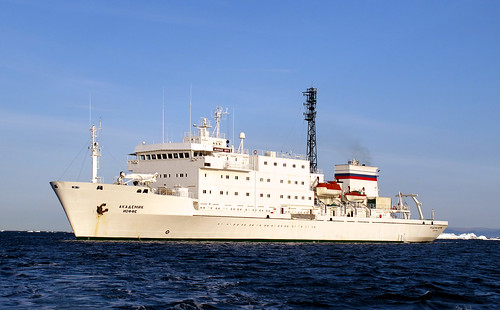
Ioffe_HiRes_1259
One Ocean's Akademik Sergei Vavilov is a regular visitor to the Canadian Arctic (R Eime)

The association complained that the list of permitting requirements 'seems to be ever-increasing.'

It listed 52 permitting, licensing, clearance, inspection, review, certification, impact, registration and reporting requirements that may be applicable when operating in the Canadian Arctic.

Jackie Dawson, Canada research chair in environment, society and policy and assistant professor at the University of Ottawa, is working on an article that argues this situation limits economic development and local entrepreneurship opportunities and essentially yet unintentionally undermines some of the work being conducted by the same institutions that are implementing the permits.

Lack of clarity puts operators at risk of non-compliance, AECO added.

According to Hans Lagerweij, president and ceo of Toronto-based Quark Expeditions, 'No Canadian body has been able to provide a complete list of requirements and/or a list of permitting authorities, so operators could easily oversee one or more requirements, which could result in a company unintentionally being non-compliant.

'This complete lack of clarity is a serious concern for all operators,' Lagerweij said. He suggested one solution could be a central permitting body or office.

'As an organization representing Arctic expedition cruise operators, we strongly urge Canadian authorities to start a process in order to streamline the complex, time-consuming, expensive and unclear permitting situation that is the reality in the Canadian Arctic today,' AECO executive director Frigg Jørgensen said.

Jørgensen believes that if things don't change, this will lead to a long-term loss of tourism and tourism-related business for Canada, and operators will continue to take their business elsewhere, as they've done in recent years.

Jørgensen expressed the hope that Canadian authorities will consult the industry to streamline and possibly even reduce the high number of requirements and learn from other similar regions such as Greenland and Svalbard.

Based in Longyearbyen, Norway, AECO represents approximately 40 international companies that operate almost 30 vessels in Svalbard, Greenland, Canada and the Russian Arctic. Among them are Abercrombie & Kent USA, Lindblad Expeditions, Noble Caledonia, Poseidon Expeditions, Seabourn and Silversea Cruises.

Friday, 6 June 2014

New Animated Guidelines for Visitors to the Arctic


Visitors to the Arctic can learn about safe, environmentally friendly and considerate behavior in the Arctic through a new animation developed by the Association of Arctic Expedition Cruise Operators (AECO).

The new 9-minute animation shows visitors what they can and cannot do when travelling in the Arctic in a down-to-earth and entertaining way. During the film the viewer is taken through a number of guidelines concerning environmental, safety-related and cultural issues.

To be viewed onboard expedition cruise vessels

The video will be shown to visitors onboard expedition cruise vessels operated by AECO members as a part of the general briefing at the beginning of an Arctic voyage. Vessels with video monitors installed in the passenger cabins or suites may also feature the animation on one of the channels.

Visitor information in mother tongues

The new animated video has an English voice-over with choice of subtitles in a number of other languages. This means that a high number of visitors can receive important information in their native tongues about safety, environmental precautions and interaction with cultures. AECO Executive Director Frigg Jørgensen said, "AECO is very proud to present these new animated guidelines for visitors to the Arctic, and hopes they will be well received, as the animation is a step forward in regard to educating visitors about the Arctic and how to go about their visit."

Animation reduces paper-use

AECO's guidelines for visitors to the Arctic has up until now been presented to passengers onboard AECO-member vessels, via PowerPoint presentations, postings onboard the vessels and/or through a booklet. Since the guidelines were first published as a booklet in 2007, almost 70.000 copies have been distributed to Arctic expedition cruise passengers. Viewing an animation instead of handing out the booklets will help reduce the use of paper.

100.000 US Dollars from Svalbard Environmental Protection Fund.

The animation was produced by Raindog Studios (www.raindog.no), and the total cost of the production was approximately 650.000 NOK/USD 106.000/80.000 EURO. Funding was granted to AECO by the Svalbard Environmental Protection Fund, see: http://www.sysselmannen.no/Svalbards-miljovernfond/

Association of Arctic Expedition Cruise Operators (AECO)

AECO is an international association for expedition cruise operators, dedicated to the promotion of responsible, environmentally friendly and safe expedition cruise operations in the Arctic. The organization has more than 35 international members who operate approximately 25 vessels in Svalbard, Greenland, Canada and the Russian Arctic. AECO members carry approximately 14 000 passengers to the Arctic annually. AECO also has developed a number of guidelines, which regulate the members' operations and visitors' behavior.

The animated guidelines for visitors to the Arctic can be seen via: https://vimeo.com/97093751. The video is also available on www.aeco.no, which provides more general information about the Association of Arctic Expedition Cruise Operators. All of the association's guidelines can be accessed on: www.aeco.no/guidelines


The animated guidelines for visitors to the Arctic can be seen via: https://vimeo.com/97093751, and are also available on www.aeco.no, which also provides more general information about the Association of Arctic Expedition Cruise Operators. All AECOs five different guidelines can be accessed on: www.aeco.no/guidelines

New Animated Guidelines for Visitors to the Arctic

Visitors to the Arctic can now educate themselves about safe, environmentally friendly and considerate behavior in the Arctic through a new entertaining animation. See: https://vimeo.com/97093751 and read more on: http://wp.me/p4e3v7-uj

Friday, 1 November 2013

Arctic Cruise association expands to include Arctic Canada and ”Russian Arctic”

Inline images 1
Zodiacs in the Kuril Islands (John Borthwick/Orion Expeditions)

AECO – Association of Arctic Expedition Cruise Operators, has decided to include Arctic Canada and "Russian Arctic" in the associations activities.

AECO, which is an association for cruise operators in the Arctic, was established ten years ago by expedition cruise operators with voyages in Svalbard. In 2006 AECO expanded to Jan Mayen and Greenland. Recently the association decided on further expansion, and will now include Arctic Canada and the national park "Russian Arctic" (Franz Josef Land and northern parts of Novaya Zemlya).

This expansion involves that AECO will take initiatives to ensure considerate, environmentally-friendly and safe tourism in these areas, among other things by implementation of guidelines for cruise operators, expedition leader, guides and guests to the Arctic. AECO seeks cooperation with authorizes and other involved in expedition cruise tourism in the Arctic and has a positive dialogue with stakeholders both in Canada and Russia.

"We look forward to continue the positive dialogue og further develop a cooperation in order to safeguard the various interests and aspects of cruise tourism, included environmental protection, safety, local community considerations and industry interests", says Frigg Jørgensen, executive director in AECO.

The decision to expand was taken during AECO's Annual Meeting and Conference, which found place this October. The conference, which gathered almost 70 Norwegian, Danish, Greenlandic, Russian and Canadian representatives from governments, authorities, researchers and other stakeholders, also gathered a broad representation from the international Arctic expedition cruise industry.

The conference's broad specter of issues included cruise related updates from the different Arctic geographical areas, status for IMO's (United Nation's International Maritime Organization) work on the Polar Code, introduction to new maritime regulations in Greenland, results from a large cruise tourism survey in Canada, plans for tourism development in "Russian Arctic" and the start of a process to consider if operators and/or guides in Svalbard should be subject to authorization-requirements.

AECO is a membership association working for considerate, environmentally friendly and safe cruise tourism in the Arctic. The association's 31 international members are responsible for approximately 26 small and medium sized cruise vessels with operations in the Arctic. AECO's members agree to follow a comprehensive set of guidelines for Arctic operations, all available in http://www.aeco.no/guidelines. Among AECO's guidelines are: Guidelines for visitors to the Arctic, Site Specific guidelines, Wildlife guidelines and Operational Guidelines.

AECO: www.aeco.no

Thursday, 26 September 2013

Arctic Expedition Leader Conference in Copenhagen


In October approximately 40 Arctic expedition leaders from all over the world and 20 speakers from Svalbard, Greenland, Denmark, Iceland, Norway, Russia and Canada will meet in Copenhagen to discuss how to conduct sustainable expedition cruise operations in the Arctic.

The conference is organized by the Association of Arctic Expedition Cruise Operators (AECO) in cooperation with Visit Greenland and Cruise Iceland and, with financial support from the North Atlantic Cooperation Fund (NORA) and the Danish-Norwegian Cooperation Fund.

The following issues will be on the agenda:
  •  how to safeguarding of the Arctic nature and environment
  •  what expedition cruise operators can do to protect Arctic cultures and cultural remains
  •  how to make sure that local communities are benefitting from high latitude tourism operations
  •  what role expedition leaders and guides have in regard to a sustainable operation in the Arctic
The focus of the conference is on how to add value for the mutual benefit of both the local communities and the visitors in the Arctic. ”What we ultimately want to achieve with the conference is to bring all parts involved with expedition cruise tourism together in order to get a hands-on discussion about how to collaborate even better for the future.” says Ilja Leo Lang, Project Manager with AECO.

AECO is an organization safeguarding responsible, environmentally-friendly and safe expedition cruise Tourism in the Arctic. A majority of the expedition cruise operators in Svalbard and Greenland are members of AECO, which currently have 31 members. 21 of which operate approximately 26 expedition cruise vessels all over the Arctic. AECO’s members have committed themselves to act sensibly and according to the strict rules and regulations in the vulnerable Arctic region. AECO has developed a comprehensive set of guidelines for Arctic operations, which AECO-members are obligated to operate in accordance with, and also publish visitors-, site-specific- and wildlife- guidelines.

Read more on:
Visitor’s guidelines: http://www.aeco.no/guidelines/visitor-guidelines/
Site specific guidelines - Svalbard: http://www.aeco.no/guidelines/site-guidelines/
Operational and wildlife guidelines: http://www.aeco.no/guidelines
AECO web site: www.aeco.no

Participants in the Expedition Leader Conference:
Albatros Travel, Hurtigruten, Grand Espaces, Oceanwide Expeditions, Quark Expeditions, Polar Quest, Poseidon Expeditions, One Ocean Expeditions, Lindblad Expeditions, Noble Caledonia, Tallship Company, 69 Nord, Association of Arctic Expedition Cruise Operators, Visit Greenland, Svalbard Tourism, Cruise Iceland, National Park Russian Arctic, Lakehead University, Greenland’s Self-Rule, Danish Center for military studies, Danish Maritime Authorities, International Association of Antarctic Tour Operators, Destination East Greenland, Nanu Travel, Destination West Greenland, Greenland National Museum & Archive and Norwegian Institute for Nature Research

Wednesday, 10 July 2013

Cruise industry introduces new regulations in Svalbard

Inline images 1

AECO (Association of Arctic Expedition Cruise Operators) introduces 11 new site-specific guidelines for selected sites in Svalbard. It is primarily localities in Eastern Svalbard that are subject to special regulations in regard to landing-operations from cruise vessels.

AECO, which is an international association for expedition cruise operators in the Arctic, has received NOK 900.000 in funding from Svalbard Environmental Protection Fund to develop the site specific guidelines. With the latest 11 guidelines altogether 20 site specific guidelines for Svalbard has been published. AECO-members have committed themselves to use these guidelines in connection with landings of passengers at the sites.

The guidelines contain general information about the specific site, including information about possible cultural remains. A map of the site gives a clear visual idea of the area and marks out potential vulnerable places. Every site guideline contains a list of considerations that should be taken when visiting the site. In addition the guidelines have photos- illustrations and general advice on how to get a good experience.

"Use of site specific guidelines is a way to regulate behavior in order to minimize the risk of negative impact on the places visited", says Frigg Jørgensen, AECO's Executive Director. "We are very glad and thankful for the funding from the Svalbard Environmental Protection Fund which together with  the cooperation with researchers and specialists, have enabled us to developed guidelines for so many places in Svalbard."

Many of the sites are not only visited by AECO-members, although a majority of the visitors that come to these places, come onboard a cruise vessel operated by one of AECO's members. AECO does, however, encourage everybody who visits these sites to make use of the guidelines, available from: www.aeco.no/guidelines/. Here an overview of all AECO's site specific guidelines can be found, including general guidelines for considerate behavior in the Arctic and Arctic wildlife guidelines.

The work with the guidelines has been organized in a project group, consisting of experts within biology, botany, archeology, cultural remains, navigation and tourism. One of the project partners has been NINA (the Norwegian Institute of Nature Research), which have contributed with a vulnerability-impact-model, that has been used at the sites.

Association of Arctic Expedition Cruise Operators (AECO) is an organization for expedition cruise operators dedicated to manage respectable, environmentally-friendly and safe expedition cruises in the Arctic. The 30 international members operate approximately 25 vessels all over the Arctic. AECO represents almost all of the expedition cruse operators in Svalbard. Every year 12.000 guests choose to see Svalbard from an expedition cruise vessel.

Svalbard's Environmental Protection Fund: www.miljovernfond.no


Tuesday, 2 July 2013

Cruise industry introduces vessel tracking in the Arctic


As a step to increase ship safety in Arctic waters, cruise operators that are members of AECO (Association of Arctic Expedition Cruise Operators) is introducing a satellite based vessel tracking scheme for vessels associated with the association. The scheme is called "AECO Vessel Tracking System"


AECO has decided to require members to participate in a vessel tracking system. This regards members operating SOLAS-vessels (passenger vessel of certain size). Today AECO launched the system and approximately 20 vessels with operations in Arctic waters are connected to it. These vessels and their operators can at any time easy log onto a website and get information about the other vessels, including name, position, course and speed.


'The AECO Vessel Tracking System is another step to increase ship safety in Arctic waters. Intelligence about other vessels, their positions and plans are important parts of the risk assessments operators are carrying out as part of their Arctic operations planning'  says Frigg Jørgensen, Managing Director of AECO.


'The operators will get easy access to the tracking information. For authorities this will be useful information and it creates redundancy on other systems that monitors ship movements. In connection with Search - and Rescue (SAR) operations we believe this system can give important additional information' Jørgensen says.


The scheme can also be used for coordination of sailing plans with the objective to keep some distance to other vessels.  


AECO is following IAATO (International Association for Antarctic Tour Operators) who has made an equivalent scheme mandatory for IAATO-members operating vessels in Antarctica.


The already existing AIS-system (Automatic Identification System) also gives information about the ship traffic and especially with the European AIS satellite running (in a test period), authorities already have an overview of the ship traffic in Arctic waters. The cruise industry does not, however, have access to AIS-information, except for nearby vessels. Through the AECO Vessel Tracking System, the cruise operators can get information about each other, regardless of their positions. 


AECO's Vessel Tracking System is not open to the public, but in addition to vessel operators connected to the scheme, relevant authorities will be given access if they require it. 


AECO - Association of Arctic Expedition Cruise Operators

AECO is an international association for expedition cruise operators in the Arctic. The association's objectives are to ensure considerate, sustainable and safe expedition cruise tourism in the Arctic. Among the members are approximately 20 expedition cruise operators, operating 25 small and middle sized cruise vessels in the Arctic. This represents a great majority of the expedition cruise operators in the area. They annually carry 14000 – 15000 passengers. Large conventional cruise vessels are not a part of this.  www.aeco.no


Tuesday, 27 December 2011

Guidelines for Passenger Landings on Spitzbergen

Passengers go ashore from Zodiac in Spitsbergen (R Eime)

The Association for Arctic Expedition Cruise Operators (AECO) has presented guidelines for landings on Spitzbergen – known as the “Svalbard Site Guidelines.” Nine site-specific guidelines for locations along the west coast of Spitsbergen are available. They can be found at www.aeco.no/guidelines.

“The guidelines give information about specific sites and advice on how to behave on these sites in order to avoid any unwanted influence when visiting,” according to AECO. Members of AECO and their guests are obliged to follow these guidelines, but AECO would like to invite and encourage all other visitors to do the same, the organization said in a prepared statement. Its members have since many years operated in accordance with the guidelines and also ask guests to follow a set of general “guidelines for visitors to the Arctic.” These are also available on the same website.

The Svalbard guidelines have been developed through a project financed by the Svalbard Environmental Protection Fund. The project group has had the following participants: Archeologist Per Kyrre Reymert, archeologist Kristin Prestvold, biologist Georg Bangjord, botanist Dagmar Hagen, field-ornithologist/photographer/artist Trond Haugskott, biologist and expedition leader Ko de Korte, expedition leader/assistant project manager Joern Henriksen and project manager Frigg Joergensen. The Governor of Svalbard represented by tourism adviser Stein Tore Pedersen has acted as adviser. The project has based the site assessment on a methodology developed by NINA (The Norwegian Institute for Nature Research) and NIKU (The Norwegian Institute for Cultural Heritage Research). Dagmar Hagen from NINA has been in charge of the assessments. “Svalbard Site Guideline’s” design and web-site has been developed by TANK – Tromso.

AECO includes 16 members operating altogether 22 cruise-vessels in Arctic waters, ranging from 10 to approximately 300 passengers. In 2011 AECO-vessels carried some 13,000 passengers to the Arctic and among these, 10,00 visited Svalbard. AECO’s main objective is to ensure respectable, environmentally-friendly and safe expedition cruise activities in the Arctic.