Monday, 26 December 2016

Free nights in Fiji with Captain Cooik Cruises


#expeditioncruising .
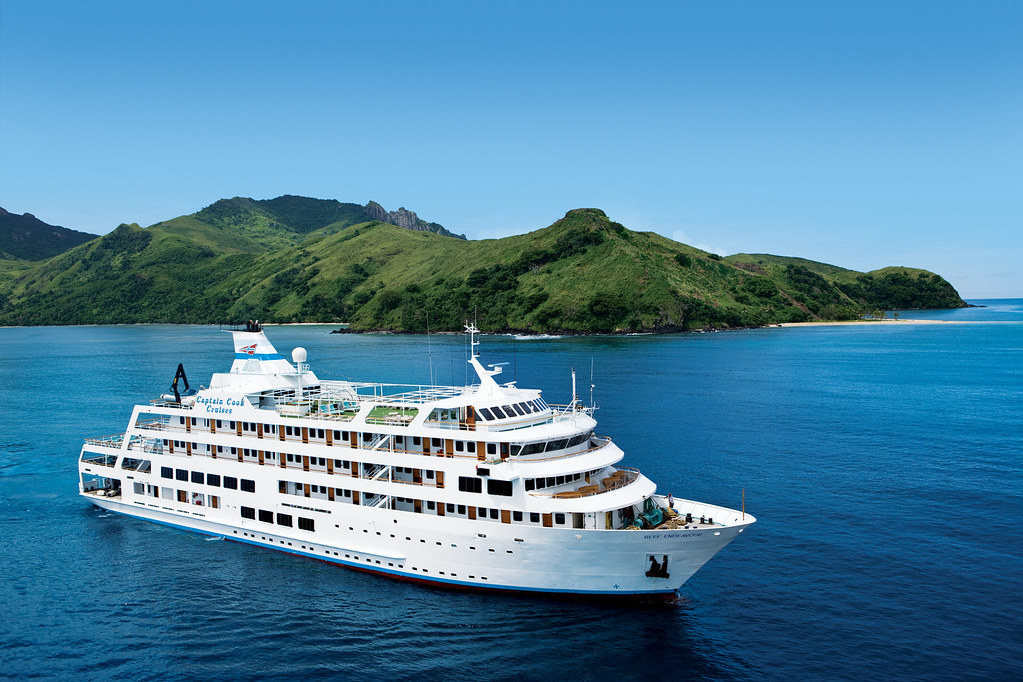


Captain Cook Cruises Fiji has a released a ‘Three Nights Free Sail’ with savings of up to AUD$1495 per person. Book any 11 night Lau and Kadavu Discovery Cruise, 7 night Mamanuca and Yasawa Islands cruise and 7 night 4 Cultures or Colonial Discovery cruise and receive three nights free. This deal is on sale until 28 February, 2017 and valid for travel until 31 March 2018.

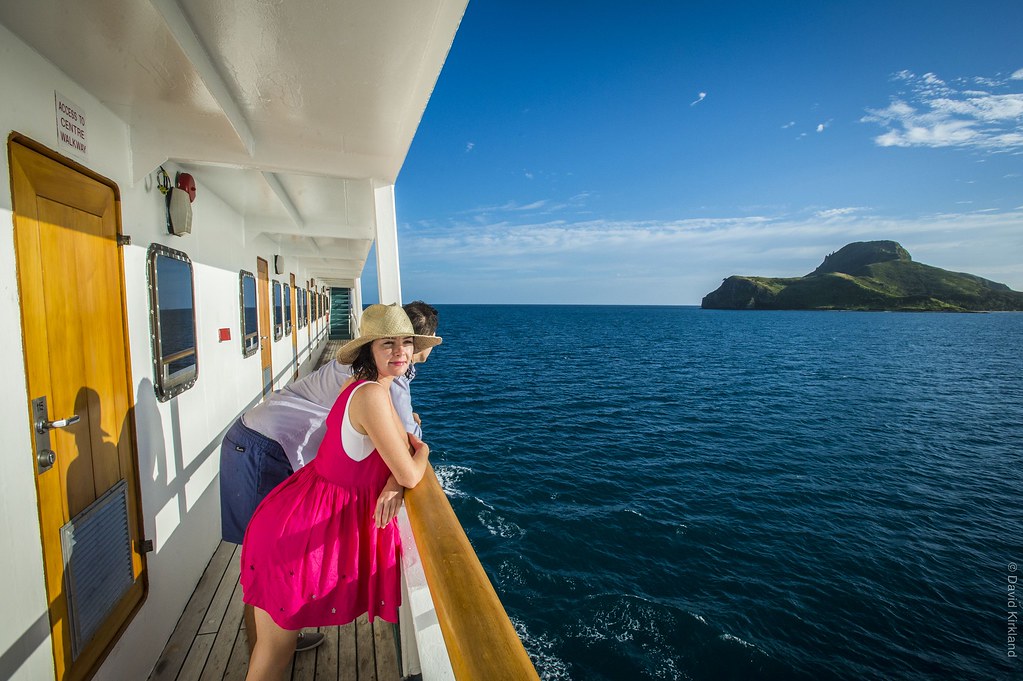
All 7 and 11 night cruises are aboard the 130-passenger, fully accommodated MV Reef Endeavour small ship cruise vessel. The newly refurbished ship can visit parts of Fiji larger ships cannot get to and passengers have the unique experience of visiting remote villages, churches and schools and taking part in traditional village sevusevu ceremonies and Meke and Lovo feasts.

As well as being immersed in Fijian culture there is plenty of time for relaxing on white sandy beaches, swimming in crystal clear waters and snorkelling or diving in spectacular blue lagoons. Passengers can even take a glass bottom boat ride to witness the thriving marine life on Fiji’s coral reefs.

Stay on-board and be pampered at the ships Senikai Day Spa, or simply relax on the sun deck by the spa or pool, or grab a cocktail at the pool bar.

Dining is another vital ingredient of these amazing cruises. Whether it is an alfresco luncheon, a casual barbecue or table d’hote dinner, all food is prepared on board from fresh local and imported produce and cultural on-board entertainment adds a special flavour to the mix.


A complimentary Kids Club is available for children 5-9 years where children can make new friends, have lots of fun and learn about and experience the Fijian culture. Kids Club operates between 9.00am and 12noon, 2.00pm to 5.00pm and from 6pm and 9pm.

The 7-night Yasawa Islands and Mamanuca cruise departs Port Denarau every Tuesday and Saturday for the ultimate Southern and Northern Yasawa Island experience.

The 7-nights 4 Cultures Discovery cruise circumnavigates Vanua Levu, Fiji’s second largest island and visits four distinctive Fijian cultures including Ellice Islanders (Polynesians), Banabans (Micronesia), Fijians and Indians. The cruise visits the islands of Kioa, Rabi, Labasa Town on Vanau Levu, Kia Island and the world’s third longest barrier reef, “The Great Sea Reef”.

Scheduled 2017 and 2018 departure dates for 4 Cultures Discovery Cruise include 02 May and 05 September 2017 and 02 January 2018.

The 7- nights Colonial Fiji Discovery Cruise reveals the unique history, art and culture of the Northern Fiji Islands and allows passengers the ultimate experience of ‘standing’ on the 180th Meridian, the natural dateline. The cruise also visits the recently Heritage listed old capital of Fiji, Levuka on the island of Ovalau; Taveuni, the garden island; and Savusavu, a town of hot springs and Pearl farms.

Scheduled 2017 departure dates for the Colonial Fiji Discovery Cruise include 07 February, 04 April, 06 June, 01 August and 05 December 2017.

The eleven nights Lau and Kadavu Discovery Cruise explores the lengths of the Lau Islands and Kadavu, a part of Fiji rarely seen by tourists. The cruise visits the islands of Makogai, a freshwater swimming hole on Lavena, Qilaqila, Oneata Wailagilala, Fulaga, Kabara, Vuaqava, Totoya, and Kadavu.

Departure dates for the Lau and Kadavu Discovery Cruise include 03 January, 07 March and 07 November 2017 and 06 March 2018.

The ‘Three Nights Free’ cruise sale is on sale until 28 February 2017 and valid for travel until 31 March 2018.

Prices for the ‘Three nights Free Sail’ for the seven night Yasawa Islands and Discovery cruises start from AUD$1995 per person twin share, normally AUD$3140 per person twin share and prices for the eleven-night discovery cruise start from AUD$3990 per person twin share, normally AUD$5485 per person twin share.

All fares include shipboard accommodation, all meals, guided village, school and island tours, snorkelling and glass bottom boat excursions, daily island stopovers and water activities, hikes and Kayak safaris, on board entertainment, kids club (5-9 yrs), onboard Wi-Fi, 24-hour self-service tea and coffee bar, post cruise transfers to Nadi and Denarau hotels and Nadi airport and use of the ship's facilities including a swimming pool, spa’s, mini gym, sun deck, cocktail bar and library.

For further information and bookings visit www.captaincookcruisesfiji.com or contact your local travel agent.

Saturday, 24 December 2016

Cruise Log: Gizo & Njari Island

#expeditioncruising .

L´Austral – Saturday 24th December 2016
Gizo & Njari Island
Western Province, Solomon Islands

L'Austral at anchor off Gizo (Justin Friend)
By Justin Friend

Since leaving Rabaul we have been steaming full ahead into the territorial waters of the Solomon Islands. Once shared between the German and the British, the German claim to the islands was relinquished during the aftermath of WWI. Independence came to the Solomons in 1978 and after a period of turmoil and civil war in the late 1990s and early 2000s today the islands have returned to their peaceful ways, a lifestyle that has earnt their nation the nickname of the “happy isles”.

To allow for official clearance procedures we were required this morning to make a port call in the town of Gizo on the island of Ghizo, the administrative capital of the Western Province of the Solomons.

Being Christmas eve the small outpost of Gizo was very quiet. In addition, a large portion of the population are Seventh Day Adventists, and being today was Saturday and Saturday is their Sabbath, there were very few carvers and merchants selling their wares. However casually wandering the streets we were still able to get a good feel for this sleepy little township. Lining the main street were multiple “Chinese stores”, the generic name given across Melanesia to the general stores started by early Chinese migrants that sell everything from hardware to underwear under the one roof.

The PT-109 bar, named after the patrol boat captained by one John F Kennedy that was sunk just offshore from Ghizo during WWII, had even sold out of beer, apparently the aftermath of a giant pre-Christmas party the night before our arrival. But Gizo served its purpose of meeting the arrival regulations in the Solomon Islands and with Solomon Island’s officials onboard now this allowed us to move offshore slightly to Njari island to spend the afternoon enjoying the environment around us.
Many of you will know the original itinerary plan was to visit Kennedy Island. Kennedy Island was the island where the crew from PT-109, including JFK, hid from the Japanese and were eventually rescued through the efforts of an Australian Coastwatcher.

However Kennedy Island today is owned by the Gizo Hotel and is currently being turned into a waterside bar and restaurant, and apart from essentially being a construction zone, much of the offshore reef has been destroyed. So we sought out another island as a substitute and by all reports Njari was the perfect substitute. Those same afternoon black clouds that have appeared almost every day once again made an appearance, although the rain itself held off. From all reports the coral and marine life here was impressive with many of you commenting “the best so far” in describing the reef experience this afternoon.

Being a French ship we followed the European tradition of celebrating Christmas on the evening of December 24th. Many of you participated in a special pre-dinner Christmas concert in the theatre, which included performances from our younger fellow guests as the “Cool Kids” performing their “Kids-mas” dance presentation, and our fellow guests from Taiwan performing Christmas carols in English and Mandarin together with a traditional Taiwanese song for our entertainment. But the main event was of course our Christmas Dinner, with the executive chef, his entire galley team and of course the restaurant team presenting us with yet another scrumptious feast to cap of our first day in the Solomon Islands.


Friday, 23 December 2016

Update on Lindblad's National Geographic Quest

#expeditioncruising .

Sneak peak at the progress on our newest ship – and first ever new build - the 100-guest National Geographic Quest.


Thursday, 22 December 2016

Cruise Log: Rabaul & Little Pigeon Island

#expeditioncruising .

L´Austral – Thursday 22nd December 2016
Rabaul & Little Pigeon Island
East New Britain Province, Papua New Guinea

Wreck of a Japanese WWII bomber slowly consumed by the ash and jungle (Justin Friend)

By Justin Friend

This morning we had a series of tours we could choose from and we were divided up into multiple groups as we each headed off on our adventure. Several of the fittest amongst us joined with their guides to climb the largest of the Rabaul caldera volcanoes, known as “the Mother”. Despite the heat, humidity and steep terrain the climb was successful and everyone made it back with a smile on their face.

A large group of us stayed in the immediate Rabaul area to explore the old town now buried under tonnes of ash. We took a drive down the once picturesque Mango Avenue which before the 1994 twin eruptions was lined either side with giant mango trees. One could only imagine how it looked back then as today there is very little evidence to show it was once a bustling town. From Mango Avenue we were then driving on what was once the Rabaul airport. Like the rest of the town the airport has now been moved further down the peninsula, safe from any future eruptions.

Off to the side of the airport, under some coconut trees, lie the remains of two WWII aircraft. A twin engine bomber and a single engine fighter, both Japanese aircraft, were destroyed on the ground during the war by American air raids. Like the rest of the area they too were buried under the ash but the local Matupit villagers have dug the aircraft out to allow us to be able to view them. The sulfuric acid produced by the volcanic eruptions has taken its toll on the WWII relics and they most likely will be no longer recognisable as planes within the next few years.

Admiral Yamamoto, the infamous Japanese naval commander in charge of the Japanese forces in this region during WWII commanded his forces from Rabaul for a great deal of the war. Hundreds of kilometres of tunnels were constructed under Rabaul during the war and we were able to access part of Yamamoto’s command bunker. Next to the bunker entrance was the old German New Guinea headquarters, which after WWI became the New Guinea Club, and which was also seconded by Yamamoto during WWII for use as a headquarters building. Today the New Guinea Club houses the Rabaul Historical Society, who with very little funding do their best to maintain accurate historical records and displays.

The Rabaul highlights tour culminated with a visit to the Rabaul Volcano Observatory which not only houses the equipment monitoring the volcanoes in the caldera but also provides a great view point looking out over Simpson Harbour. Then it was a quick visit to the town fruit and vegetable market as we returned to L’Austral waiting patiently for us at the wharf.

The third tour group today headed out of Rabaul and went further down the peninsula to the redeveloped town area of Kokopo. On the way the Japanese tunnel systems were quite evident and the group was able to see several landing barges still sitting inside the tunnels pretty much as they were left at the end of WWII albeit a little rustier and more decrepit. These tunnels were also dug out by locals after the volcanic eruptions to allow us to be able to view them today. Kokopo also has a reasonable collection of WWII artefacts including artillery pieces and light tanks on display at the town’s historical museum.

One of the most significant parts of the Kokopo tour was the visit to Bitapaka. Here lie the hundreds of predominately Australian soldiers killed during the Battle for Rabaul in WWII. A token Australian force, known as Lark Force, had been stationed on the peninsula to defend the airstrip and deep water port. Lark Force was significantly outnumbered when the inevitable Japanese invasion came. Those not immediately killed were captured and taken prisoner. Tragically, as the Australian PoWs were being shipped to Japanese occupied Hainan island off the coast of China to be used as labourers, an American submarine attacked and sank the Japanese cargo ship killing all the surviving Australians from Lark Force.

Bitapaka also had a role during WWI. The first Australian casualties of WWI lost their lives here, and their remains also lie in the Bitapaka War Cemetery. The Australians had been asked by the British to land at Rabaul and destroy a German Wireless station at Bitapaka. After a short battle that spread around the peninsula over several days, the Germans were defeated and soon right across what was then German New Guinea, the imperial German flag was replaced with the Australian flag, which then flew over the New Guinea Islands until 1975 when they joined the rest of the mainland and island groups to become the independent nation of Papua New Guinea.

Our afternoon was spent in the Pigeon Island group just outside Rabaul Harbour. The dark clouds that seem to have been following us since Tufi built up once again this afternoon but didn’t really give us too much grief. A local family from the Duke of York Islands were camping on Little Pigeon Island for the weekend during their Christmas holidays and while surprised to be suddenly sharing their secret holiday island with 200 international visitors arriving from a giant ship they warmly welcomed us and invited us to share their island.

We sailed out of PNG waters this evening en route to the Solomon Islands where more adventures await us…


Wednesday, 21 December 2016

Cruise Log: The Bismarck Sea to Rabaul

#expeditioncruising .

L´Austral – Wednesday 21st December 2016
The Bismarck Sea to Rabaul
East New Britain Province, Papua New Guinea

Simpson Harbour, Rabaul (Justin Friend) 

By Justin Friend

For a great deal of the day we were traversing the Bismarck Sea on our way to the northern tip of New Britain island to the port of Rabaul. The township itself was effectively destroyed in the twin eruptions of Tavurvur and Vulcan in 1994. Numerous earlier eruptions including a significant one in 1937 had really set the scene for what was to come. After the 1994 devastation, most of the town’s businesses and residences, and even the airport, moved further down the peninsula to the town of Kokopo which now serves as the provincial capital. The town of Rabaul proper today really only serves as the deep water port with most businesses that remain involved in one way or another with servicing the port and its workers.

The approach into Rabaul allowed us to view some spectacular scenery. Most of us lined the rails of the outer decks to marvel at the multiple volcanic peaks surrounding us, numerous fumaroles emitting their telltale plume of steam were easily spotted from the ship as we entered Simpson Harbour. Captain Daumesnil even navigated a short detour in to the adjacent Matupit Harbour right underneath the active Tavurvur to give us all a better view. Meanwhile in the lounge the hotel team had provided a colourful array of the classic French delicacy, the Macaron, to satisfy any sweet tooth cravings we may have had.

But the event we were all looking forward to was the trip to Rapitok Village on the edge of the Baining Mountain Range. Boarding our trusty fleet of small buses, each equipped with a local driver and guide we ascended the short distance to Rapitok, arriving just on dark. Taking our place in the semi-circular viewing area set out in front of a large field, a fire was started in the centre with villagers continuously adding firewood to the building conflagration. The purpose of all this was for the Atut – the night-time cultural performance of the Baining people.

Baining fire dancers are an amazing sight (Justin Friend) 

The Atut is truly a spectacular event. Traditionally used to honour the dead, celebrate successful harvests and most importantly initiate boys into manhood, the Baining men construct giant masks of bark tapa cloth stretched over a wooden framework for the dance. Typically, with very large eyes, the masks represent the spirits of animals hunted traditionally by the Baining. Several large pythons, representing the dangers associated with hunting in the bush were paraded during the performance, each snake held at one end by an uninitiated boy and at the other end a fully initiated adult male. The fire in the centre is built up as the men dance themselves into a trance like state.

Covered in a “magic” oil made from local plants and with their feet covered in a special covering of “magic” leaves to help give protection, the men run through the fire sending showers of glowing sparks high into the night sky. The accompanying vocals and percussion, a very primordial sound made by holding hollowed out logs vertically and literally bouncing them off a solid wooden slab, ebbs and flows, building in intensity and speed as the village men, now effectively totally evolved into the spirit animal their costumes represent, run into the fire, then slowing briefly as the men regroup and gather on the sidelines before once again entering the blazing fire.
For the villagers themselves, once the Atut begins it will continue until either they run out of fuel for the fire or until the sun rises the next morning. But for us from L’Austral, we had another delectable feast awaiting for us on the ship, so it was back on our fleet of mini-buses, leaving the dancing Baining in the glow of the fire, as we descended back dow to sea level and our awaiting ship. Tomorrow we will explore Rabaul, for now we will sleep in the shadow of the volcanoes…


Tuesday, 20 December 2016

Plant your flag with Hurtigruten

#expeditioncruising .


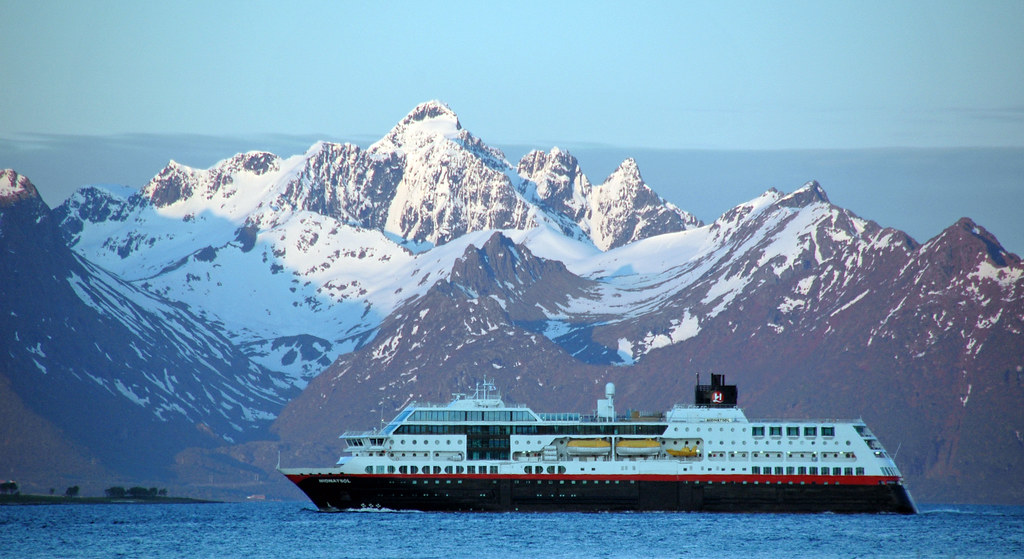
With Hurtigruten’s new Explorer fleet, explorers and travelers now have the chance to literally – or figuratively – plant their personal flag in some of the most exciting and remote areas in the world. Planting a flag in the wilderness has always been a symbol of achievement.

Of course, the meaning of ‘achievement’ can vary from person to person. For some, climbing Mount Everest is a great achievement, while for others just getting through a night in a tent in the backyard is worth celebrating. Now, everyday travelers and explorers can experience the same thrill when they first set foot in a new destination during a Hurtigruten cruise.

In 2017 and 2018, travelers can explore Antarctica, Canada, Greenland, Europe, and Spitsbergen or cross the Atlantic Ocean on a Hurtigruten Explorer voyage. Hurtigruten Expedition vessels are specially designed to offer guests up-close wildlife nature experiences; there are also multiple action-packed and educational activities during the journey.

This year, MS Fram, MS Midnatsol, and MS Nordstjernen were joined by MS Spitsbergen, taking explorers to the distant shores of the most easterly province of Newfoundland in Canada, deep into Greenland’s fjords, and to the coastline of the British Isles. Hurtigruten’s newest ship the MS Roald Amundsen is powered by hybrid electric power for short periods of time and will enable silent and reduced-emission travel in fragile environments like Antarctica.
Travelers can easily — and firmly — plant their flags in any of these breathtaking, remote locations.

“Hurtigruten’s explorer cruises offer new and exhilarating combinations of active adventures and destinations,” says Gordon Dirker, Managing Director, Hurtigruten North America. “When travelers sail with us, we encourage them to plant a flag for a cause that is personal to them and to embrace their inner explorer.”

Hurtigruten is working with several explorers to help them plantflags for their personal causes.

Johanna Davidsson, a nurse by profession, is passionate about glacier guiding, mountain climbing, skiing, paddling and sailing. This year, Davidsson is heading to Antarctica – on an expedition that will make her the first Swedish woman to ski solo to the South Pole and back, without reinforcements on her way in. She will plant her flag for all those who wish to connect with their inner explorer.

Tim Kemple whose works have been published in dozens of outdoor publications and Pete McBride who has spent two decades travelling the world shooting for the National Geographic Society, Smithsonian, Outside, Esquire and companies like Patagonia, Microsoft and The Nature Conservancy. They will be kayaking the melting ice rivers of Greenland to plant their flag to bring greater awareness to the climate challenges facing our planet.

Karin Strand, an Expedition Leader for Hurtigruten who takes guests deep into the great wilderness of Antarctica, will plant a flag for a sustainable environment.

David Lindo, also known as The Urban Birder, was born and raised in London where he now works as a broadcaster, writer, photographer, public speaker and tour leader. This year he is heading to the Amazon, where he will plant a flag for the Great Auk and help bring awareness to the increasing rate of extinction of species in the rainforest.

Cecilie Skog is the only woman in the world to have reached The North Pole, The South Pole and the summit of Mount Everest. She has also climbed the highest mountain on each continent, known as “The Seven Summits.” Her husband Alexander Gamme is a Norwegian explorer, skydiver, safari guide and writer. Together with their kids, they are preparing to plant a flag in Arctic Canada, representing their passion for “friluftsliv” or ”outdoor adventure.”

Oceanwide Expeditions supports Marine Protected Areas in Antarctica

#expeditioncruising .


Oceanwide Expeditions applauds the adoption of the Ross Sea region marine protected area recently adopted by the Commission for the Conservation of Antarctic Marine Living Resources (CCAMLR) and strongly supports more areas of protection.

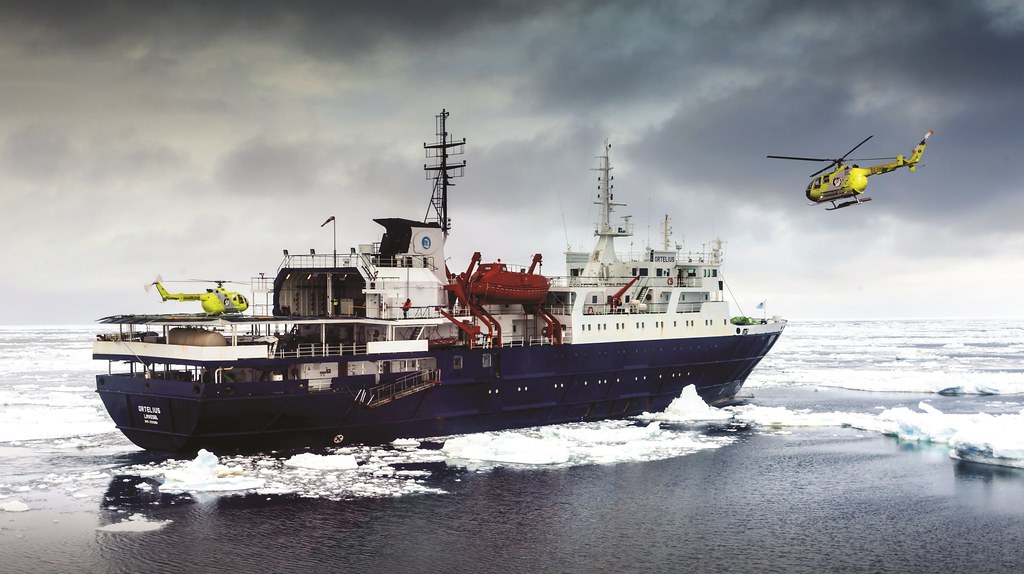
Oceanwide Expeditions organizes two Ross Sea voyages between January and March 2017 with the ice-strengthened vessel Ortelius, including helicopter transfers.

As a founding member of the International Association of Antarctica Tour Operators (IAATO), Oceanwide Expeditions advocates and promotes the practice of safe and environmentally responsible private-sector travel to the Antarctic.

“We pride ourselves on organizing high-quality polar excursions, with our ships taking hundreds of tourists to the Antarctic each year to experience the Antarctic continent, its ice shelves and islands, and the magnificent Southern Ocean that surrounds it.
We believe in a combination of tourism and protection, and are deeply committed to protecting this region so travelers may experience this wilderness area for generations to come. Tourism helps drive conservation on a large scale by exposing individuals to the awe-inspiring Antarctic environment, which then enables them to become ambassadors for the Antarctic’s pristine nature”.

To further our environmental goals, Oceanwide Expeditions supports marine protected areas (MPAs) in the Southern Ocean surrounding Antarctica and elsewhere, a process than has been in place for several years. MPAs contribute to protect unique and representative habitats and ecosystems, serve as reference areas for science including climate change science, contribute to building resilience in the face of global climate change, and help ensure the sustainability of fisheries.

In 2009, the Commission committed to designating a network of large-scale marine protected areas in Antarctic waters. After initial progress, discussions to create two large MPAs in the Ross Sea and in East Antarctica had been in virtual gridlock since 2012. This changed dramatically in October 2016, when the Ross Sea region marine protected area was unanimously adopted. This protected the first of nine planning domains with an area of over 1.5 million square kilometers — the largest MPA in the world to date.

This is only the beginning, as other MPA proposals for the Southern Ocean are in various stages of development. In September 2016, at the International Union for Conservation of Nature’s World Conservation Congress, a resolution passed encouraging an increase in the percentage of marine areas in MPAs to at least 30 percent by 2030.

As one of the responsible users of the Southern Ocean, Oceanwide Expeditions looks forward to the enforcement of the Ross Sea region marine protected area in 2017 and the adoption of further MPAs. We encourage CCAMLR member governments to continue the process of establishing a network of permanent protected areas. Furthermore, we encourage other Antarctica Tour Operators members to support a complete ring of MPAs around Antarctica.


Cruise log: Kitava and Nuratu, the Trobriand Islands

#expeditioncruising .

L´Austral – Tuesday 20th December 2016
Kitava & Nuratu, the Trobriand Islands
Milne Bay Province, Papua New Guinea

Young Trobriand dancers on Kitava welcome guests (file image by Roderick Eime)

By Justin Friend, Austronesian Expeditions

Leaving the rain of Tufi behind us, we awoke to find the sun shining down upon us as we anchored off the island of Kitava in the Trobriand Islands. Before us the clear blue waters of Nuratu Lagoon separating the larger island of Kitava and the much smaller uninhabited island of Nuratu beckoned to us while off to the distance we could see the coastline of the largest island in the Trobriand group, Kiriwina. To fit in with the local customs on Kitava we needed to be welcomed as a group before we set off to explore our surroundings.

Monday, 19 December 2016

Cruise Log: Return to Tufi

#expeditioncruising .

Performing an unusual role as 'guest lecturer' aboard Ponant, former expedition director for Orion Expedition Cruises, Justin Friend, shares some insights as he returns to the land he loves, PNG


L´Austral – Monday 19th December 2016
Kofure Village, McLaren Harbour & Kamoa Beach, Tufi Fiord
Oro Province, Papua New Guinea

By Justin Friend

Tufi has become one of the best-known destinations in PNG, primarily because of the world class SCUBA diving offshore serviced by the Tufi Dive Resort. But for us onboard L’Austral it was the exposure to the culture of this region that will no doubt stay long in our memories.

The area of Cape Nelson, where we were today, includes multiple fiord-like canyons; vertical cliffs either side descending directly into the sea. If we want to be accurate in their geological description these fiords are what are known as rias. A fiord is created by glacial action while a ria is created by volcanic lava flow. Either way the scenery is dramatic and the rain we experienced overnight and during the day had created several instant waterfalls flowing from the vertical cliffs down to the sea.
We were split into different groups today to visit the village of Kofure inside McLaren Harbour the next fiord north of Tufi Fiord itself. Some of us travelled by ship’s Zodiac, some in boats provided by the dive resort but ultimately we all transferred to local dugout outrigger canoes for the final leg to Kofure.

L'Austral in PNG waters
Sitting on top of our canoes, the local villagers, many dressed in their traditional bilas or “finery”, paddled us up the shallow waterway into the working area of Kofure. After negotiating the somewhat muddy landing at the village, warriors painted black as is the tradition when going to war challenged our arrival on their land. Right across Melanesia the warrior challenge is a common practice when strangers arrive in someone else’s tribal area. As we are still alive to tell this story, we were obviously deemed as friendly and allowed to continue on our way.

The people of Tufi are an interesting mix of culture and genetics spanning tens of thousands of years of migrations and history of New Guinea. The people of Tufi are genetically and linguistically part of the earliest migrations to the area as part of the larger “out of Africa” movement of early humans. They have only lived in the Tufi area itself for the last few hundred years, having for thousands of years lived much further inland in the area’s mountainous interior. As erupting volcanos and population growth limited their land choices inland they “negotiated” through both tribal wars and straight forward commercial purchases the acquisition of the rugged and relatively infertile coastal lands atop the ridge lines around Tufi.

Here the inland peoples were exposed to the much more recent arrivals of the Austronesian or maritime migrations, the same migrations that went on to give us the Polynesians further east in the pacific. These migrations stayed in the area long enough to influence the Tufi people who adopted their facial tattooing processes, their use of clay pots and some linguistic adaptations, but their maritime visitors did not stay long enough to have a significant influence on their genetics.
As we were led by local guides through the Kofure village working area we witnessed demonstrations of the facial tattooing process and the process involved in making the sago based starch food product that is the year-round staple in this area. Traditionally all local women were required to have the full-face tattoos applied at the time of reaching puberty however know the process is an individual choice. In the traditional sense a woman who was not tattooed could not participate in custom dance performances and was not eligible for marriage. Sago, the starchy pith of the Sagu sagu palm “trunk” is rather tasteless and bland but given the infertile and swampy ground the Tufi people live on, sago has become their main food source with the addition of protein in the form of fish.

Through-out the day we were also blessed with access to the white sand beaches and surrounding reefs of Kamoa. Just behind the beach Chief Lucas and his family live in traditional houses and are the customary custodians of the Kamoa area inside the Tufi Fiord itself and graciously gave us permission to use “his” beach. Late in the day the wind picked up considerably making the Zodiac transfers back the ship quite adventurous to say the least.

Leaving the rolling seas and misty skies behind us, it’s time to sail to the Islands of Love to continue our adventure.


Friday, 16 December 2016

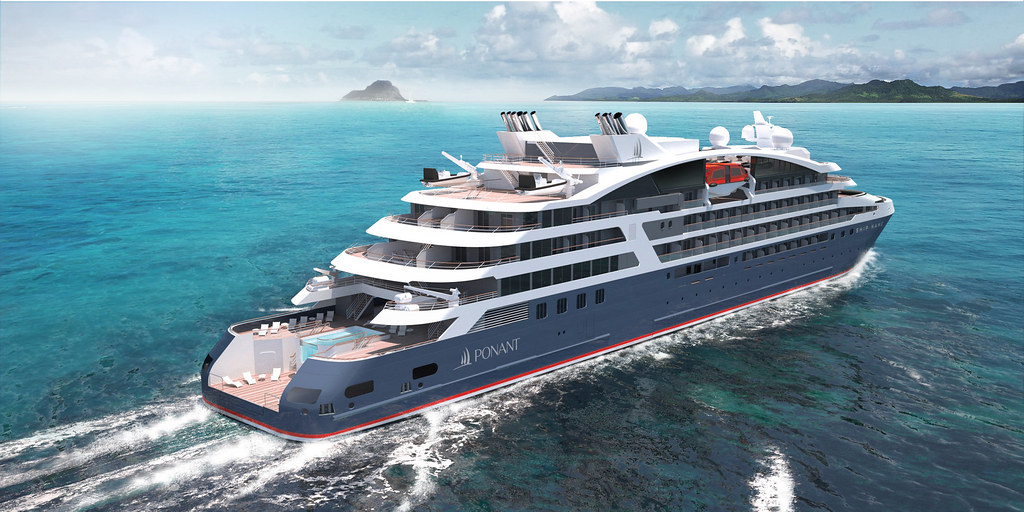
Ponant's French Revolution

#expeditioncruising .


From The Bridge is the magazine of Cruiseco

For your own copy of From The Bridge, see your local Cruiseco agent.


Great Daytrip Bonuses for Cruising on the Murray Princess

#expeditioncruising .


Captain Cook Cruises is offering fantastic day trip bonuses to the Barossa Valley or Kangaroo Island, worth up to $635 per person, for anyone booking and travelling on a three, four or seven night Murray Princess cruise in January or February 2017.

Murray Princess three, four and seven night cruises explore the Murray River, its terrain, wildlife and Australian history and culture.

Each day features exciting day trips to historic ports and places and follow the food and wine trial for tastings on-board or at several vineyards and cellar doors along the river.

Enjoy guided nature walks and eco-tours, learn about the thriving ecology of the river and get up close to the river’s 20-million-year-old cliffs and amazing birdlife including darters, herons, pelicans and egrets on the ‘Dragon-Fly’ Flat Bottomed Boat vessel.

Join the Captain for a general inspection of the wheelhouse, participate in lively quizzes, play some bocce on the riverbank or relax with some fishing off the ship.

On-board, enjoy the rivers enchantment and beauty from the Murray Princesses open top deck or from one of two air-conditioned paddlewheel lounges displaying views of the working paddle wheel. Cruise past towering limestone cliffs, riverbanks lined with mallee scrub and red gum forests and amazing everchanging scenery.

Book a three-night Discovery cruise in an inside cabin, starting from AU$926 per person, twin share and receive a free Barossa Food & Wine Experience or a Barossa & Hahndorf tour worth $139 per person.

Sample some of the Barossa’s finest wines and gourmet food on the full day, Barossa Food & Wine Experience and visit Adelaide's oldest German settlement, Hahndorf, to explore the many picturesque cafes, shops and galleries full of local arts, crafts and German produce on the Barossa & Hahndorf tour.

Book a three-night Discovery Cruise in an outside cabin starting from $1262 per person, twin share, or a four-night Outback Heritage Cruise in an inside cabin starting from AU$1266 per person, twin share and receive a 1 Day Kangaroo Island Experience or Seal Bay Discovery tour worth $275 per person, including SeaLink coach and ferry transfers.

The 1 Day Kangaroo Island Experience visits Seal Bay Conservation Park; Hanson Bay Wildlife Sanctuary and Flinders Chase National Park to see nature’s Remarkable Rocks, Admirals Arc and the Long-Nosed Fur Seals.

The Seal Bay Discovery Day Tour includes a visit to Emu Ridge Eucalyptus Distillery, Kangaroo Island Wildlife Park; Seal Bay Conservation Park and Raptor Domain for a fascinating Birds of Prey free-flight presentation. Both tours include a hearty two- course lunch at Vivonne Bay Lodge Bistro,

Book an Outside Cabin on the four-night Outback Heritage Cruise starting from AU$1694 per person, twin share and receive a Barossa Wine & Heritage Tour including a visit to two premium wineries, lunch and fantastic scenery before returning to Adelaide to spend two nights at The Sage Hotel in Adelaide including breakfast, worth $319 per person.

Book a seven night Murraylands and Wetlands Cruise in an inside cabin starting from AU$1888 per person, twin share and receive two nights at The Sage Hotel, Adelaide, including breakfast and a 1 Day Kangaroo Island Experience, worth $439 per person including SeaLink coach and ferry transfers.

Book an outside cabin on the seven night Murraylands and Wetlands Cruise starting from AU$2646 per person, twin and enjoy the 2 Day Best of Kangaroo Island tour for free, worth $635 per person.

The 2 Day Best of Kangaroo Island Tour visits the Emu Ridge Eucalyptus Distillery; Kangaroo Island Wildlife Park; Seal Bay Conservation Park; a spectacular Birds of Prey free-flight presentation at Raptor Domain; Clifford’s Honey Farm; Hanson Bay Wildlife Sanctuary, Flinders Chase National Park to see the Remarkable Rocks and Admirals Arch. Lunch is included both days and overnight accommodation at including breakfast, at American River, Penneshaw or Kingscote.

Prices include the free bonus trips throughout January and February 2017, accommodation, all meals, guided nature walks, eco-excursions, onboard presentations, onboard WiFi, the Captain’s Dinner and Cocktail Party, live entertainment, use of ship’s facilities including a sauna, spa, sun deck, bar, two lounges, restaurant and mini gymnasium and complimentary scenic coach transfers from Adelaide or car-parking in Mannum.

A new Mannum to Adelaide Airport coach transfer service is now operating post cruise for disembarking Murray Princess passengers flying out of Adelaide.

Private car transfers for up to four people are also available from and to Adelaide CBD to Mannum and return to Adelaide Airport for $143 per person each way, based on two people travelling.

For more high res Murray Princess Cruise, Kangaroo Island and Adelaide/Barossa images visit: https://www.dropbox.com/sh/qe286o3h9qjjd02/AACY4vO41JfpTJuT_orIkFIia?dl=0

For further information or bookings T: 1300 729 938 or email: murrayprincess@sealink.com.au
or visit www.murrayprincess.com.au


Wednesday, 14 December 2016

Expedition Cruising in Warm Weather Destinations

#expeditioncruising .

AdventureSmith Explorations Advises to Book Now
For Stunning Tour and Cruise Discounts
On Select Early 2017 Warm Weather Destinations

AdventureSmith Explorations offers the winter relief of journeys to sunny and warm destinations – with bargains for anyone who can act now.

Benefits of booking these warm-weather escapes before the deadline include credits of up to $700 off scheduled rates. Although most often known as the small ship cruise expert, AdventureSmith Explorations also shares land-based opportunities.


Here’s a list of specials with booking deadlines noted:

The Panama Canal springs to life on an eight-day itinerary encompassing Costa Rica and the Panama Canal. Guests who choose a Costa Rica & Panama Canal cruise departing on select 2017 dates and book by December 31, 2016, can select from; free round-trip airfarebetween Miami and Costa Rica/Panama City, plus a free overnight Panama City tour extension, which includes a private dinner at the Miraflores Locks, a city tour and a visit to the Frank Gehry-designed Bio Museum; or a $500 air credit if they cannot stay the extra day.

This classic route aboard the 62-guest National Geographic Sea Lion transports guests through the Panama Canal to explore Costa Rica and Panama’s famed national parks and wildlife reserves. Highlights are snorkeling at Isla Coiba, exploring shorelines in kayaks and learning from National Geographic guides and experts. The rate is from $6,390 per person, double. See: http://www.adventuresmithexplorations.com/costa-rica-panama-canal-barro-colorado-cruise-national-geographic-guides


In Chile, a lodge-based adventure embraces the recently renovated Explora Atacama. This luxury lodge is in the oasis of San Pedro de Atacama, 8,202 feet above sea level in Chile’s Atacama Desert. From this 50-room, comfort-driven resort guests may combine thermal bath soaks with hiking, bicycling and horseback riding while engaging in their choices of over 40 explorations that are led by bilingual guides. Year-round, day-time highs are in the mid 70s. The first night is free for bookings made by March 30, 2017 for stays through April 30, 2017 (minimum three-night stay). A four-day stay starts at $2,184 per person double. See: http://www.adventuresmithexplorations.com/explora-atacama-desert-travel-hiking-biking-horseback-riding-chile

In the Galapagos select January and February departures of sister 16-guest catamarans come with savings of $500 if booked before Dec. 31, 2016. The luxury Petrel dates to 2015 and Cormorant to 2011; each serves as home base for a comprehensive Galapagos Islands cruise. Spectacular year-round, this famed archipelago is especially fun at the start of each year as water temperatures are on the rise making it the ideal time for snorkeling. The regular rate for this four-day program is from $3,090 (Cormorant), or $3245 (Petrel) per person double.
Petrel: http://www.adventuresmithexplorations.com/petrel-galapagos-cruises
Cormorant: http://www.adventuresmithexplorations.com/cormorant-galapagos-cruises


From Iquitos, Peru, guests aboard Amatista Amazon Cruise can experience 20 percent savings if they book this nine-day adventure by Jan. 31, 2017. Enroute is an exploration of one of the last accessible tropical rainforests in the world, the Pacaya Samiria National Reserve, during its high water season (typically December through May) when rivers are up to 23 feet higher. This means closer viewing of monkeys and birdlife in the jungle canopy as the ship can go deeper into isolated corners of the reserve. The regular rate is from $2,499 per person double. This riverboat accommodates 30 guests. See: http://www.adventuresmithexplorations.com/amatista-amazon-cruise


Paradise of Tahiti: Receive a $700 savings on the Tahitian Affair Cruise if booked by Jan. 31, 2017. With departures that begin in late April, this cusp-o-winter tropical escape sails through French Polynesia’s Leeward Islands, including visits to Bora Bora, Tahaa, Huahine, Motu Iriru and Raiatea. A bonus is a scenic helicopter flight for embarkation on the luxurious 24-guest Island Passage. Kayaking, fishing, swimming, snorkeling and stand-up paddle boarding add to the fun. The regular rate for this eight-day cruise is from $4,270- per person double. See: http://www.adventuresmithexplorations.com/tahitian-affair-tahiti-small-ship-cruise-island-passage-bora-bora-french-polynesia

For information on all of AdventureSmith’s small ship cruises worldwide, itineraries, availability and reservations, Phone: 800-728-2875 toll-free or visit http://www.adventuresmithexplorations.com/.

About AdventureSmith Explorations - Think Outside the Boat!
Founded in 2003, AdventureSmith Explorations is based in Tahoe City, CA, along the northern shore of Lake Tahoe. A recognized leader in small ship cruising, in 2012 owner Todd Smith joined the ranks of Conde Nast Traveler's prestigious Annual Travel Specialists List as the world’s leading expert on small ship expeditions.