
Vessel: SH Minerva
Location: Tami Island PNG
Itinerary: Wild Eden of Papua New Guinea

The vibrant and exuberant welcome from the Tami islanders is typical of the joyful reception we've been receiving throughout the Bismarck Sea. It seemed like the whole island had dressed up to greet us.
The Zodiac approach was a bit dicey as the reef and coral bommies extended some hundreds of metres out from our landing site, and a gentle swell from the thankfully diminishing tropical storm Maila added to the fun.
 |
| Tami arts and crafts displayed for us (RE) |
Apart from the signature dances and distinctive costumes, the Tami islanders are known for their superb woodworking and carving, ranking along with the Sepik River artisans as among the most desirable objects and there was plenty on display for us along with shell jewellery and fabrics.
 |
| Fun with the villagers (RE) |
After the energetic performances, we mingled with the villagers for selfies and photos. I was particularly impressed with the quality of their stilt huts and decorative gardens. After lunch back on board SH Minerva, guests enjoyed superb snorkelling on the well-preserved reefs.
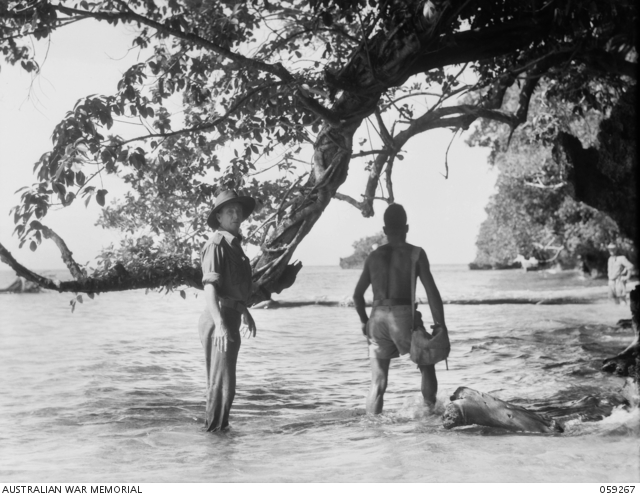 |
| Australian military ashore on Tami Island in 1943. (AWM059267) |
Like just about every island in this region, they were occupied by either or both sides during WWII and the Japanese had a small garrison here until late 1943. Most of the inhabitants were evacuated to the mainland, thankfully, after several air raids damaged the villages and palm groves. After the Japanese withdrawal, the Australians (RAAF) set up a radar station.
About the Tami Islands
The Tami Islands, in Morobe Province near Finschhafen, are a tiny coral atoll group in the Huon Gulf made up of four low-lying islands surrounding a shallow lagoon. Despite their small size, with some islands barely 80 metres across, they have long held cultural and economic importance in the region.
The indigenous Tami people are widely known across Papua New Guinea for their distinctive woodcarving, especially finely crafted bowls, masks and canoe ornaments. With no local clay for pottery, they developed a specialised carving tradition that became central to an extensive maritime trade network across the Huon Gulf and beyond. Tami artefacts were traded for food, valuables and ceremonial items, establishing the islands as an important node in pre-colonial exchange systems.
The Tami were also skilled seafarers, building elegant outrigger canoes and maintaining strong regional links. Lutheran missionisation in the late nineteenth century reshaped religious and social life, while World War II brought a period of Japanese occupation and Allied air raids.
Today, livelihoods focus on fishing, small-scale agriculture and craft production, with occasional expedition cruise visits. Like many low-lying Pacific communities, the Tami Islands face growing risks from sea-level rise, placing both their environment and cultural heritage under pressure.
ExpeditionCruising.com publisher and editor, Roderick Eime, is sailing aboard SH Minerva as a guest of Swan Hellenic. For bookings and future cruise information, please visit www.swanhellenic.com


No comments:
Post a Comment